
The study of The Bill of Rights is a natural fit for the Montessori elementary curriculum. Children between the ages of 9 to 12 are developing a strong sense of justice and social responsibility. They begin asking important questions about rules, laws, freedom, and the role of the government in society. The Bill of Rights provides an age-appropriate framework for learning these concepts while building a foundation in American civics and government.
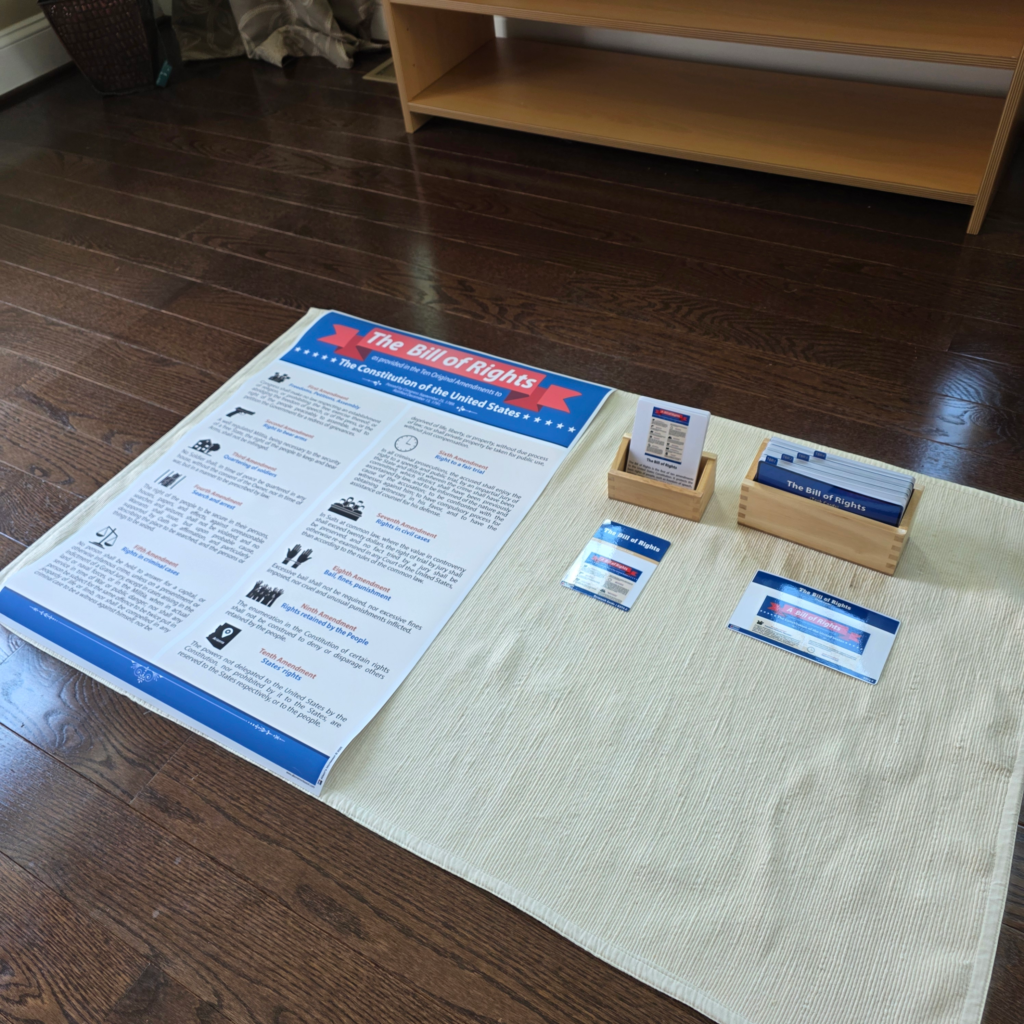
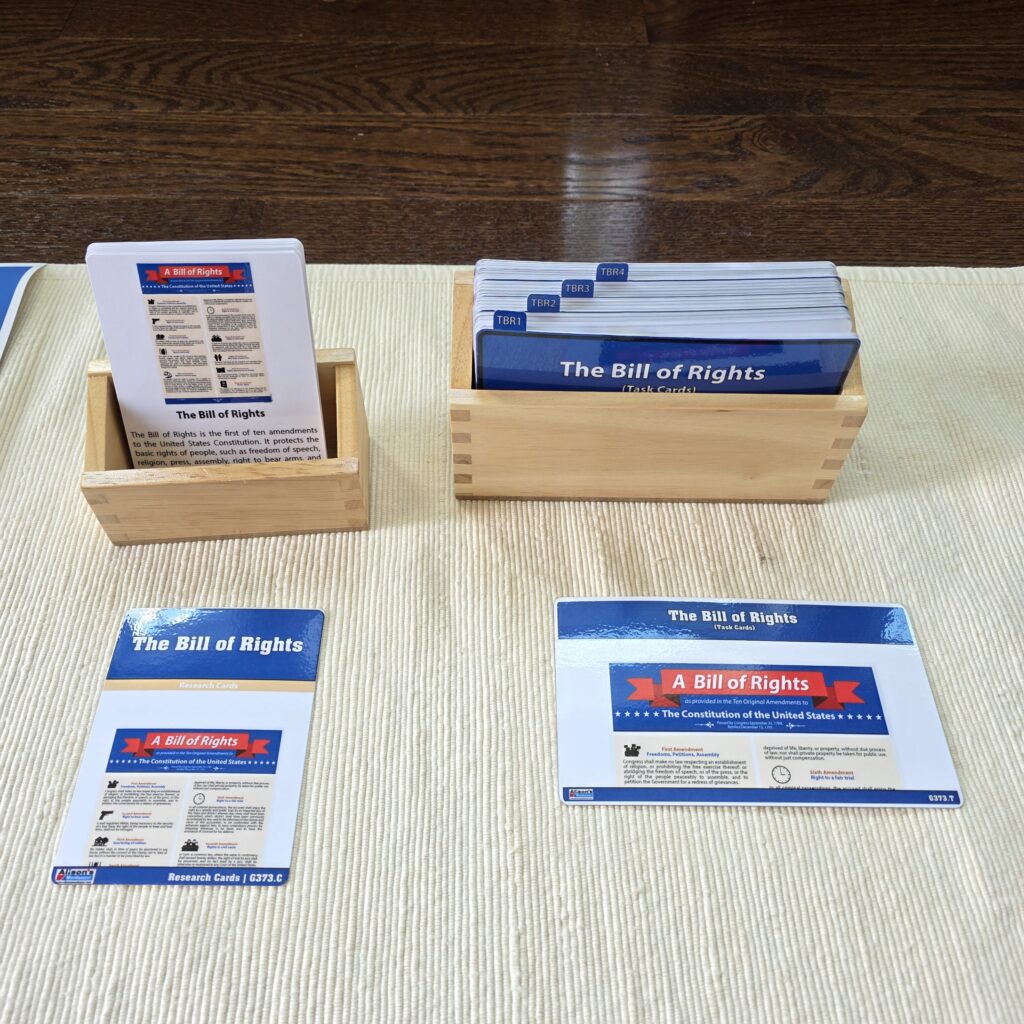
Our exclusive set of materials, The Bill of Rights complete set, is designed to help learners understand the first 10 amendments to the United States Constitution through a series of activities that progress from introduction (research cards) to application (task cards). The complete set includes a 22″ x 30″ colorful control chart, 10 research cards, and 72 task cards (storage boxes included). The materials offer a Montessori progression by moving from foundational knowledge to critical thinking. In addition, The Bill of Rights study integrates naturally with other government materials commonly presented in the upper elementary classroom. Learners who have previously studied The Three Branches of Government already understand how laws are created, interpretated, and enforced. The Bill of Rights extends this understanding by showing how the government power is limited and how individual rights are protected.
–
Materials
Step 1 – Control Chart & Research Cards
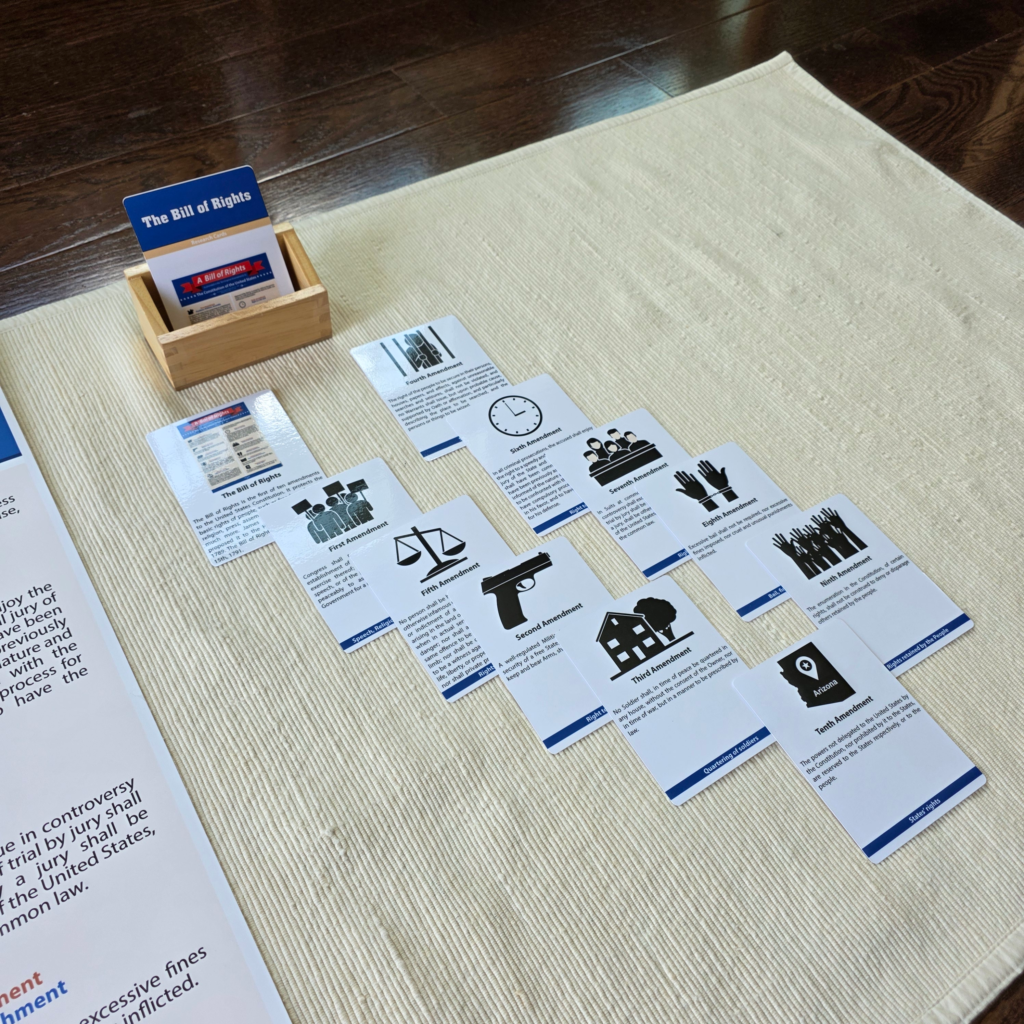
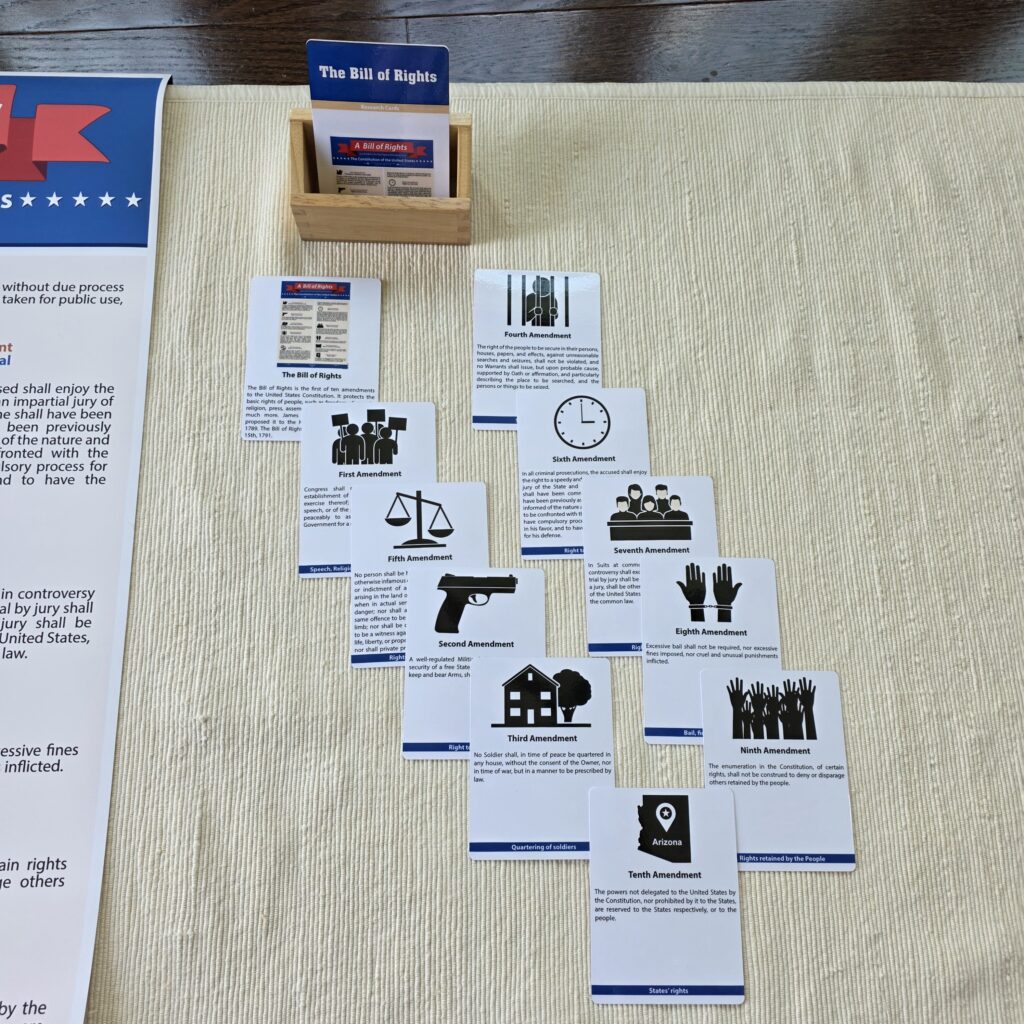
The control chart introduces students to The Bill of Rights as a complete body of work. Rather than studying each amendment in isolation, learners fist see how all 10 amendments fit together as a system designed to be clear and concise; therefore, accessible to all citizens. The chart also serves as a reference material throughout the study and allow learners to become familiar with the purpose of each amendment. It also functions as a control of error by supporting children’s independent work. Presenting “the whole” before the parts is consistent with Montessori elementary instruction. Students first gain a broad understanding of The Bill of Rights before examining “small parts” of the amendments.
After children have become familiar with the control chart, they can begin working with the research cards. Each card provides information about a specific amendment and its purpose. Learners can read the cards independently and discuss the amendments with a partner. This stage of work encourages learners to move beyond simple recognition to better understanding of constitutional rights.
Step 2 – Task Cards
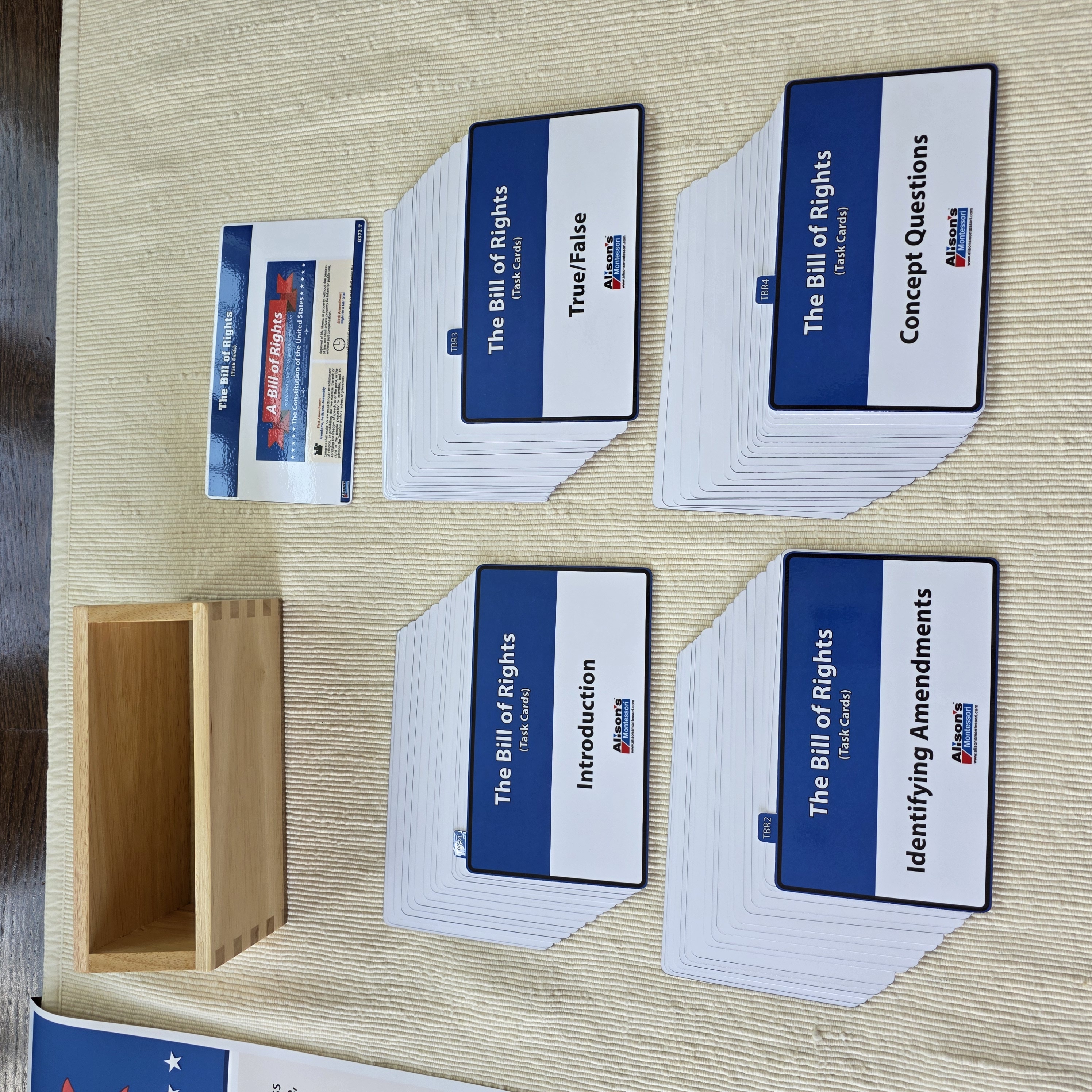
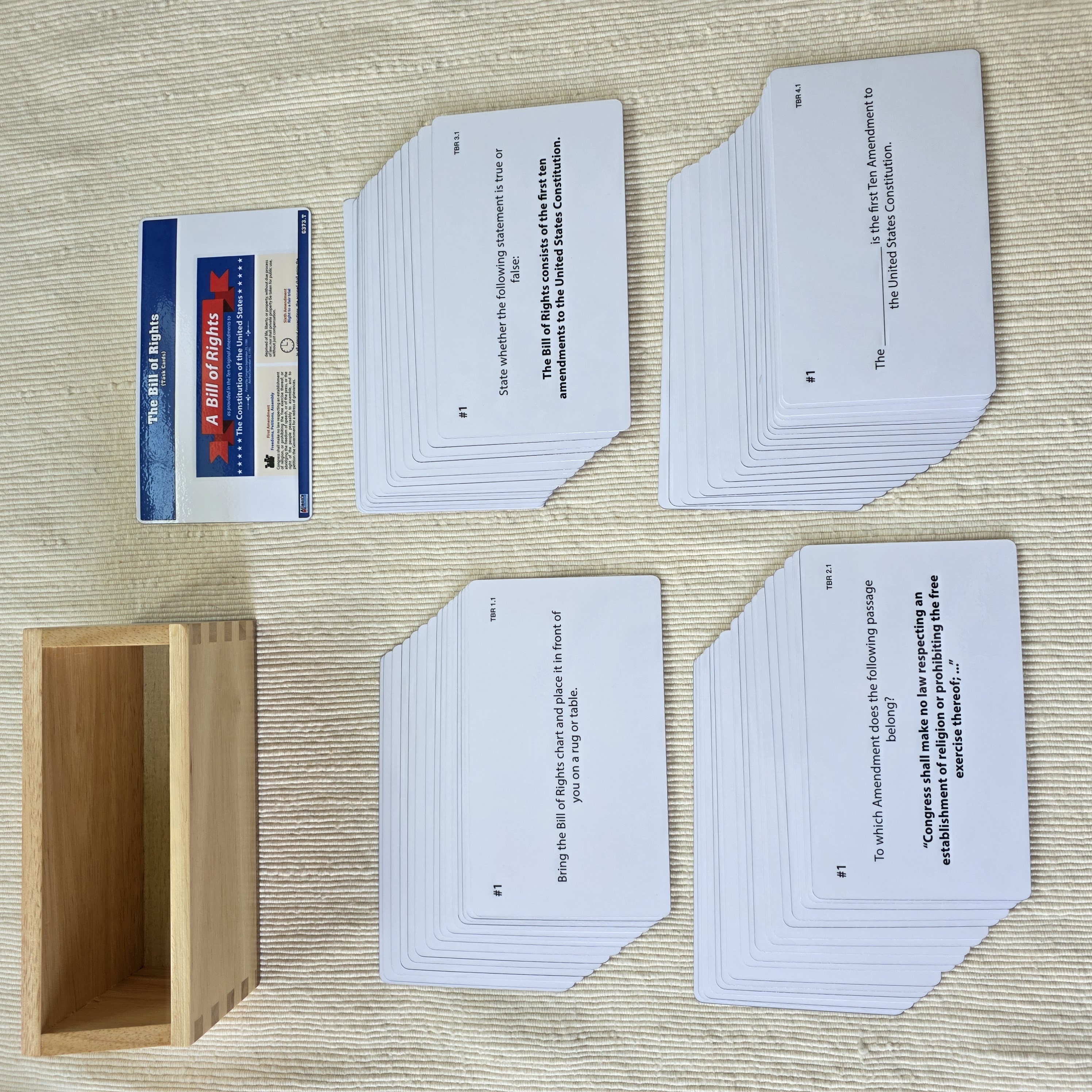
The Bill of Rights Task Cards allow learners to apply what they have learned through the Research Cards. The set includes introductory questions, amendment identification activities, true/false statements, and concept questions that encourages repetition and retention. Each card includes a control of error on the back, making the work completely independent and providing instant feedback. The Task Cards move learners beyond memorizing facts. Instead, they must think about how constitutional rights apply in different situations. The concept questions cards are especially valuable for upper elementary learners because they encourage critical thinking about fairness, responsibility, and individual freedom.
Our innovative materials on The Bill of Rights covers an important topic for upper elementary learners because it addresses questions of freedom, fairness, and civic responsibility that naturally interest children at this age. Using the control chart, research cards, and task cards in this order move learners them from foundational knowledge to acquired knowledge and application. Our materials support autonomous work while providing the guidance needed to understand the complex constitutional concepts. We encourage you to regularly visit our website as we strive to create contemporary materials aligned with the Montessori principles for learning: www.alisonsmontessori.com.