
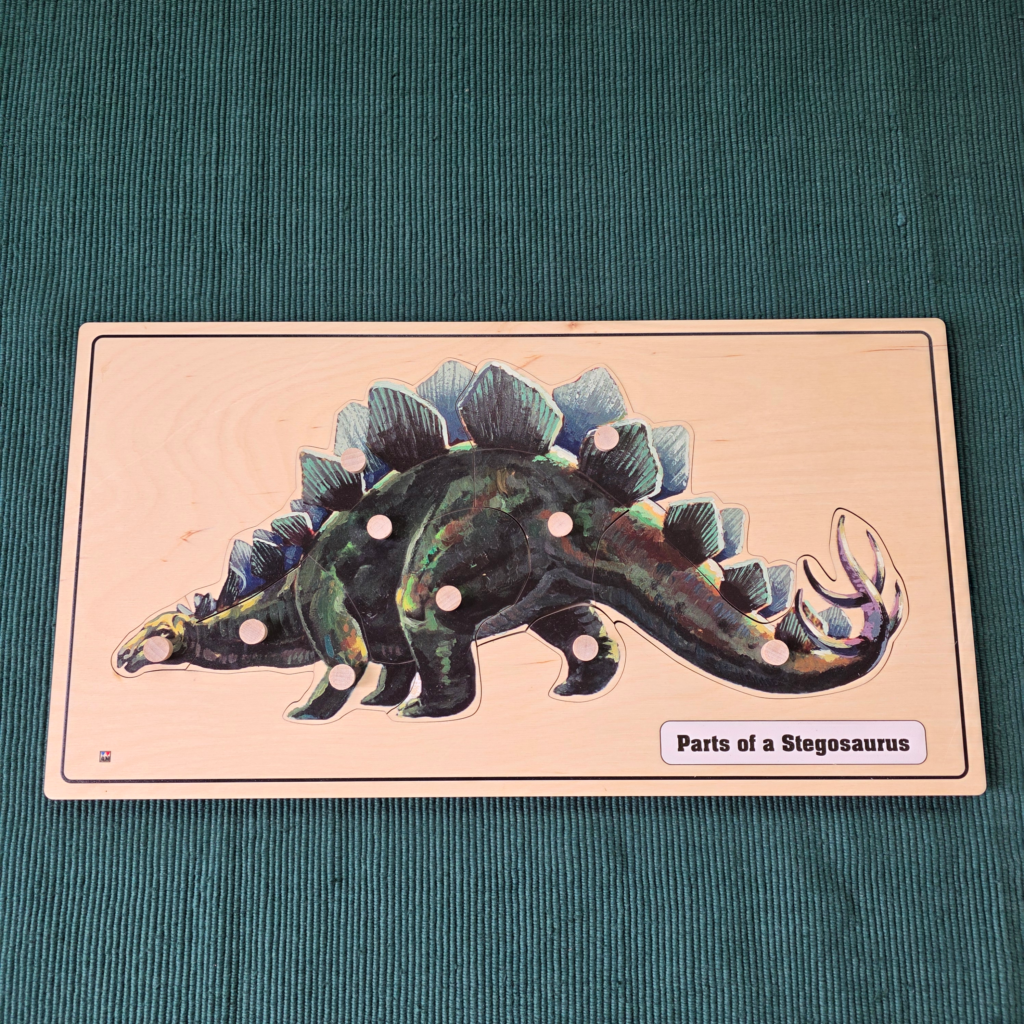
Alison’s Montessori is committed to creating exclusive materials that preserve the integrity of the Montessori pedagogy. Today, we are excited to introduce you to our new sets of puzzles and nomenclature cards on Parts of a Stegosaurus and Parts of a T. Rex. These two dinosaurs have been carefully selected based on their divergent features: diet, stance, defense system, and sensory focus.
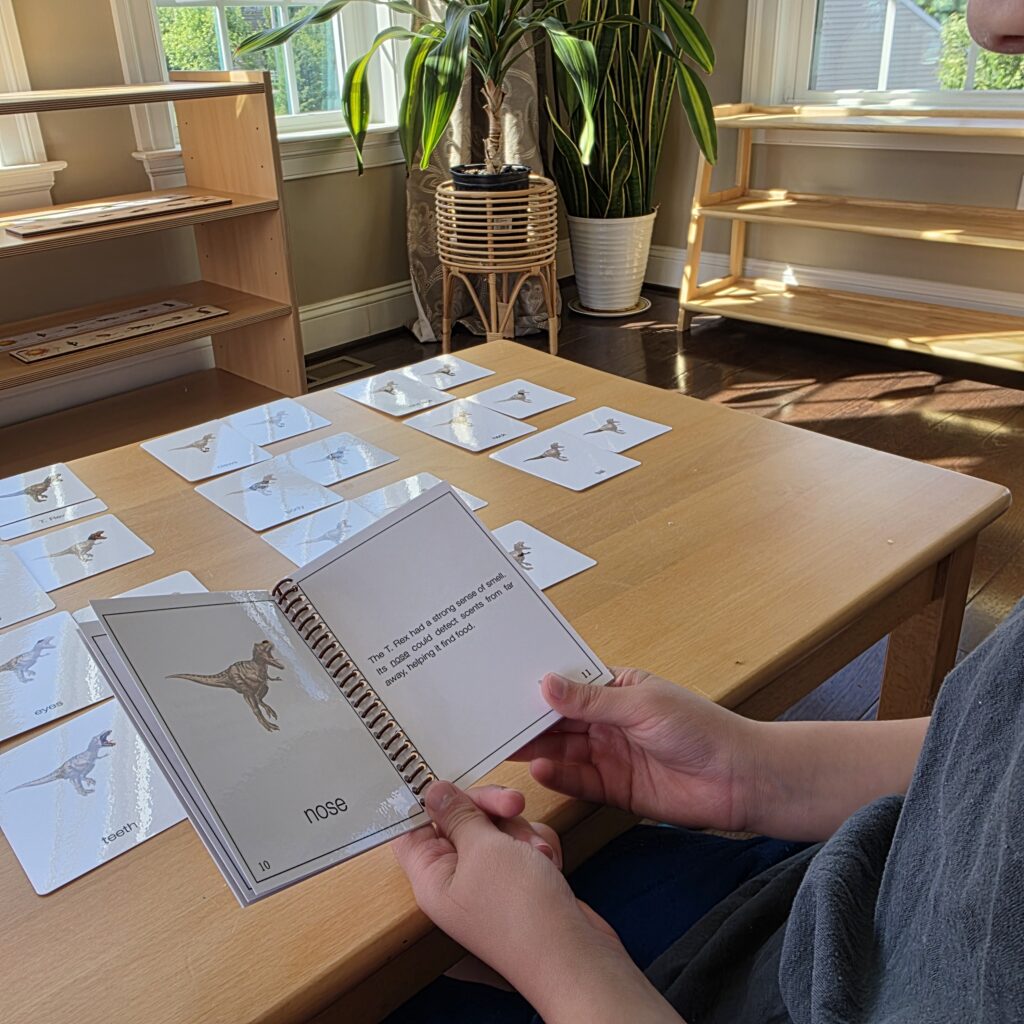
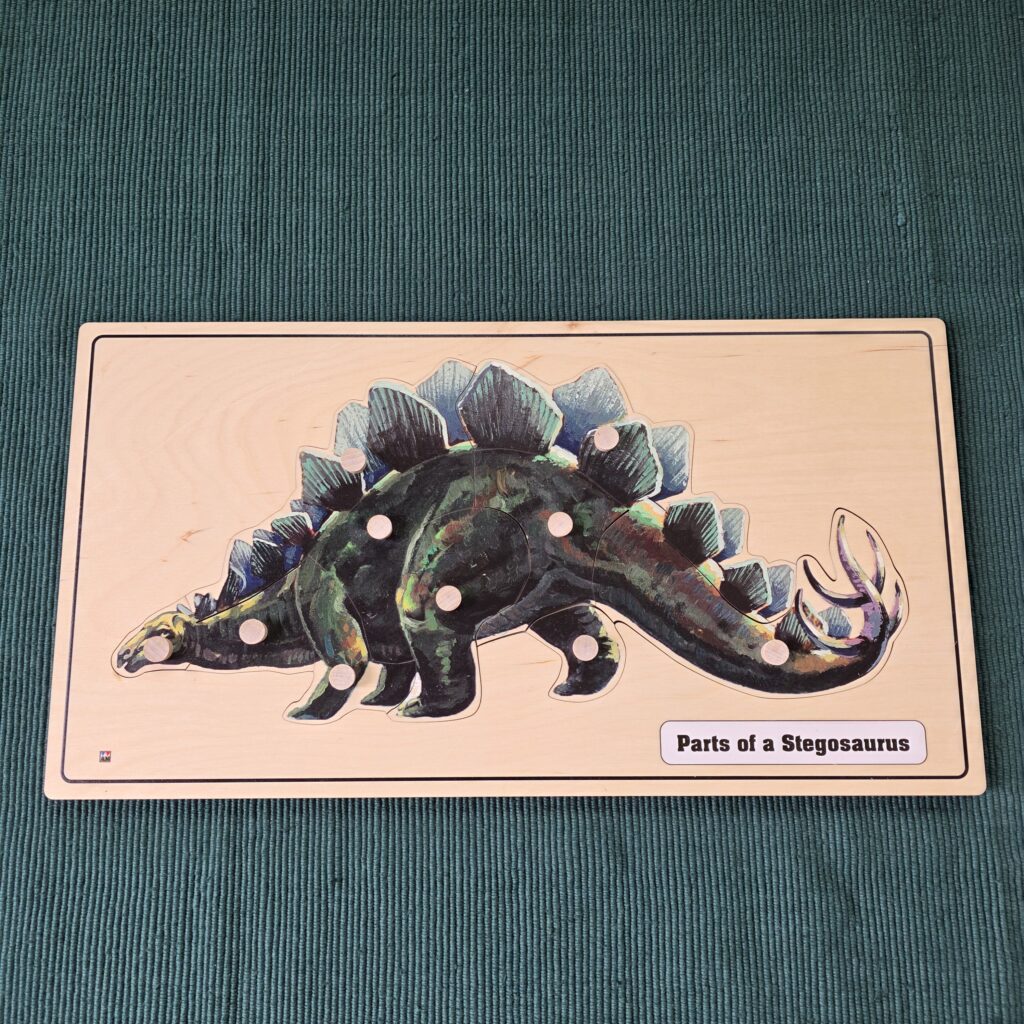
In a Montessori context, children benefit from studying concepts through the lenses of classification, adaptation, and the Timeline of Life. There is a misconception that all dinosaurs lived at the same time. You can clear this mistake by studying the T. Rex and Stegosaurus concurrently.
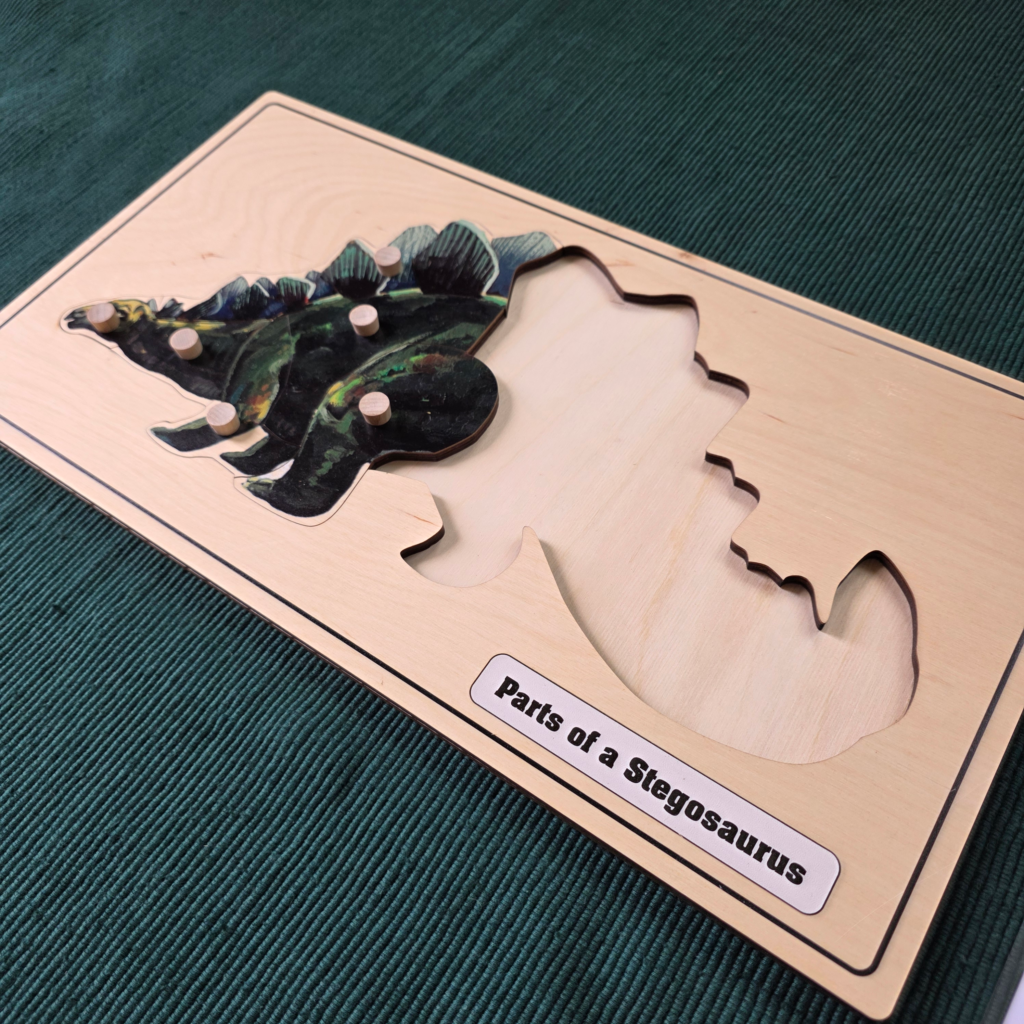
Our series of materials consists of a wooden puzzle and a set of nomenclature cards for each dinosaur. The materials cover the Primary (ages 3-6) and Lower Elementary (ages 6-9) levels, which different levels of engagements at each stage of the learning process.
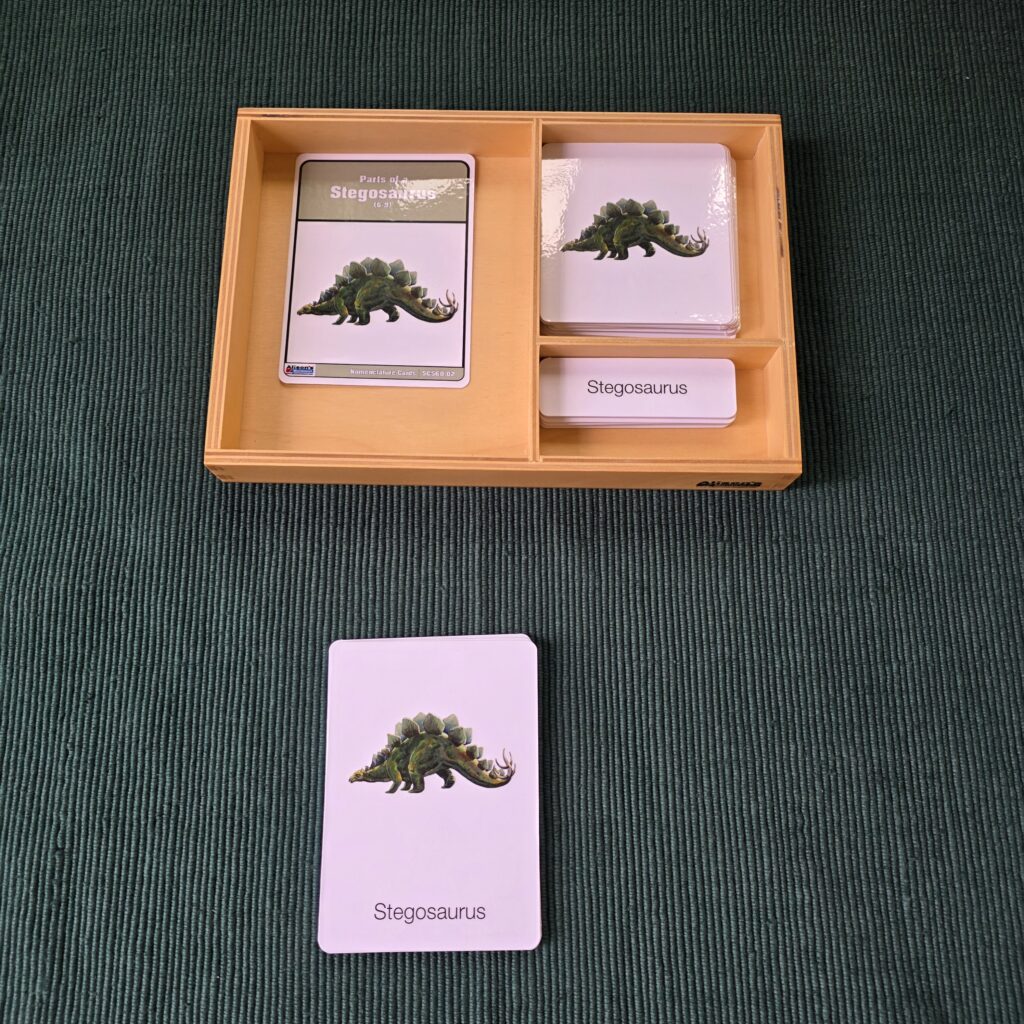
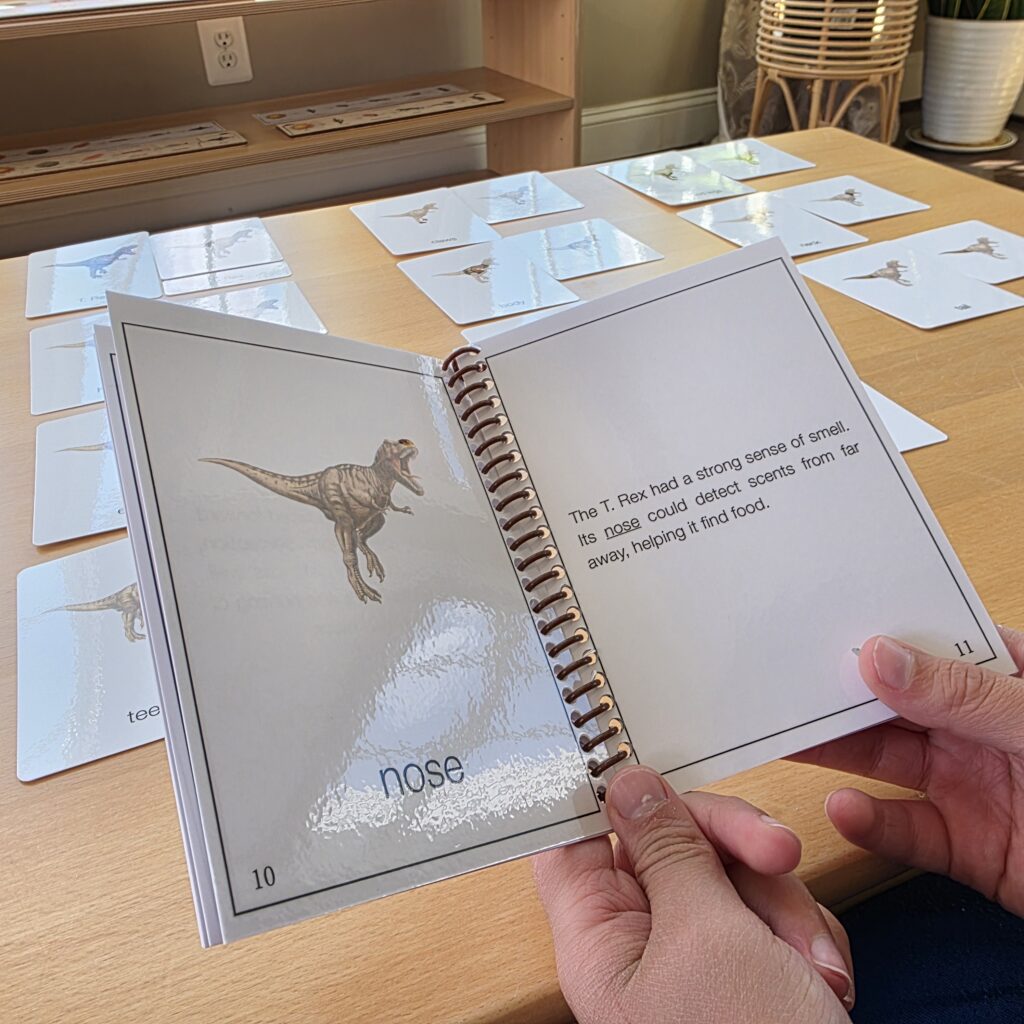
Materials
- Parts of a Stegosaurus Puzzle
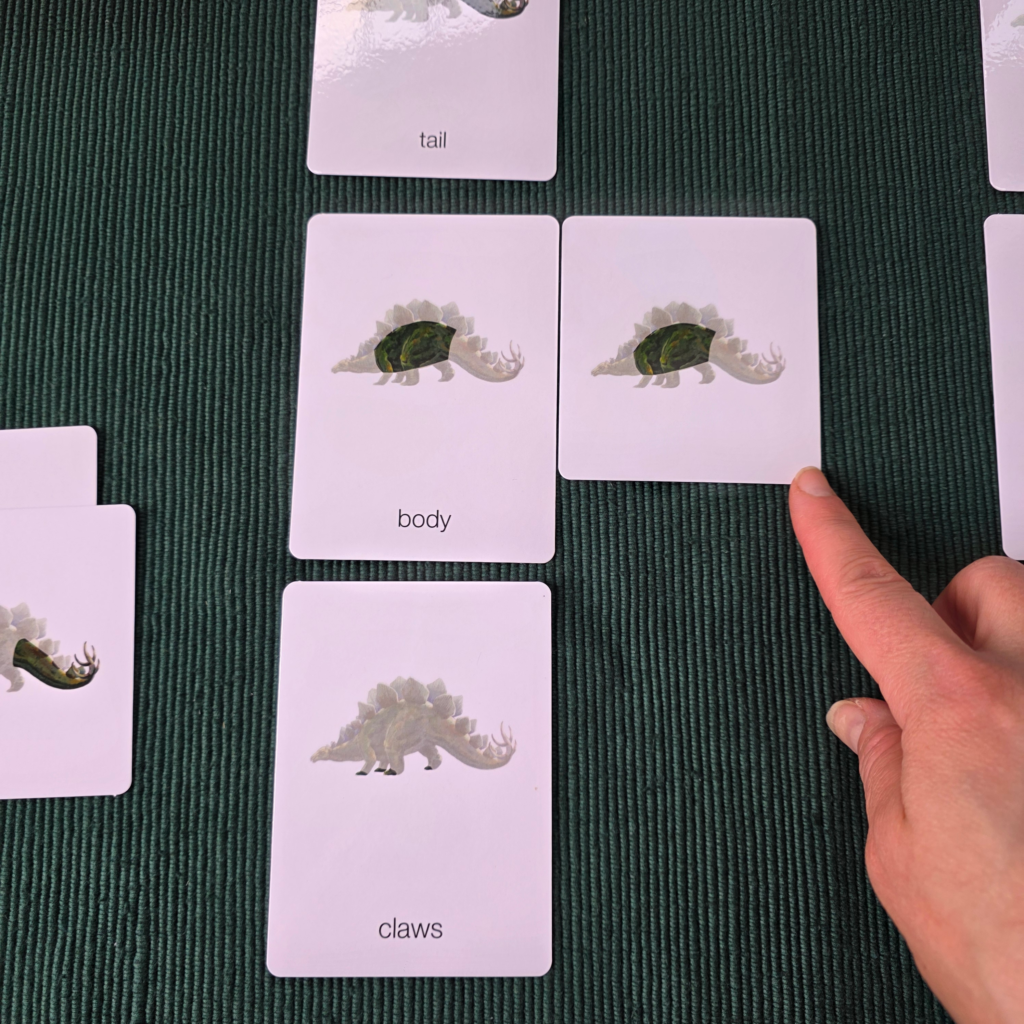
- Parts of a Stegosaurus Puzzle with Nomenclature Cards 3-6 (Printed)
- Parts of a Stegosaurus Nomenclature Cards 3-6 (Printed)
- Parts of a Stegosaurus Puzzle with Nomenclature Cards 6-9 (Printed)
- Parts of a Stegosaurus Nomenclature Cards 6-9 (Printed)
- Parts of a T. Rex Puzzle
- Parts of a T. Rex Puzzle with Nomenclature Cards 3-6 (Printed)
- Parts of a T. Rex Nomenclature Cards 3-6 (Printed)
- Parts of a T. Rex Puzzle with Nomenclature Cards 6-9 (Printed)
- Parts of a T. Rex Nomenclature Cards 6-9 (Printed)
Use in the Primary Environment (3-6)
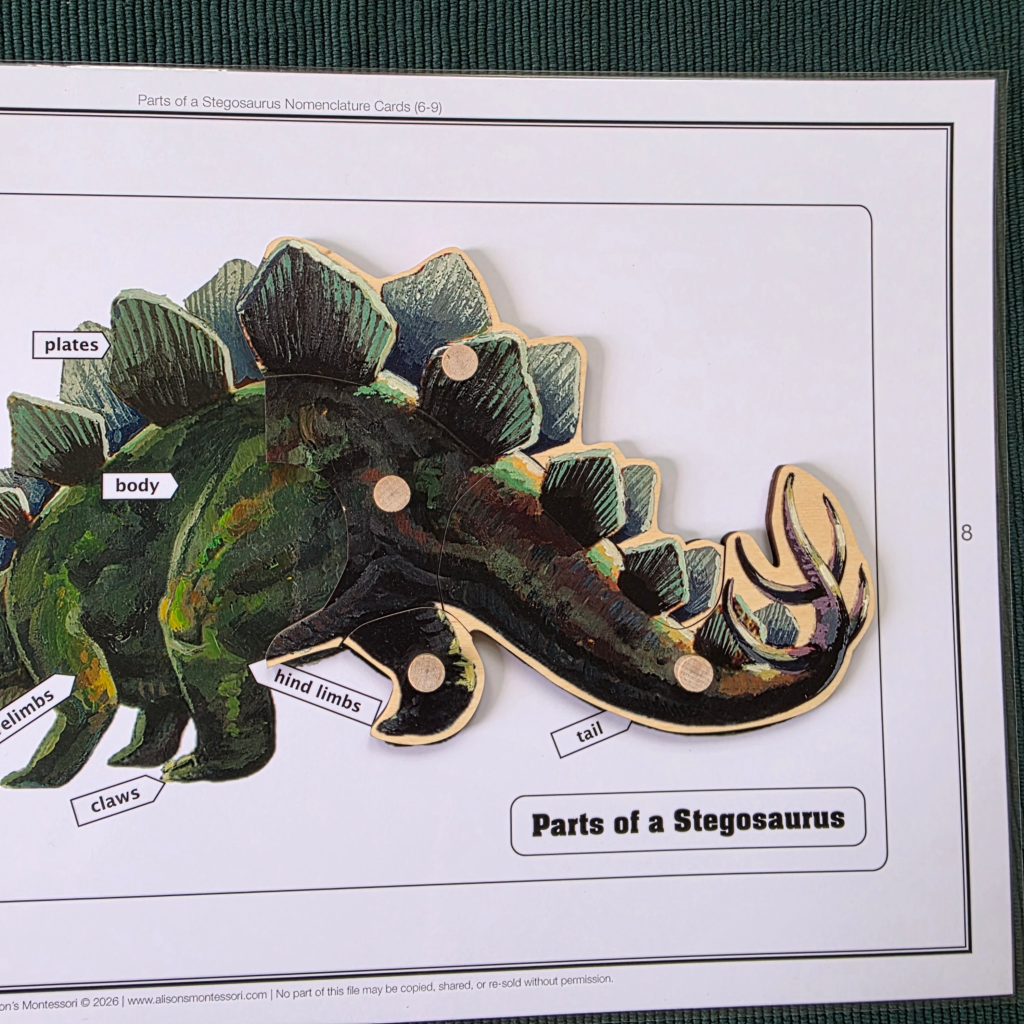
In the Primary classroom, the dinosaur materials function as part of the broader zoology curriculum, along with the sets covering Parts of a Fish, Parts of Bird, and so on. The subject matter is less important than the process. Children at this age are in a sensitive period for language and can absorb precise terminology through repeated, hands-on materials. The puzzles contain movable pieces with pegs that children can transfer to the control chart, then return them to the base board. This left-to-right transfer builds the directionality required for reading before formal literacy instruction occurs. The hand and eyes movements reinforces visual tracking from left to right across the working space, which is one of the reading readiness components.
Use in the Lower Elementary Environment (6-9)
In the Elementary classroom, the same materials are used, but at a higher cognitive level of engagement. Children at this age are developing the capacity for abstract reasoning. They are no longer satisfied with naming parts alone. They want to understand the function of parts and their relationships. That is why we create 6-part nomenclature cards that include two control cards, two labels, one picture, one cloze-test card (fill-in-the blank). Each description card explains both the name and the function of the part using precise scientific vocabulary in context. For example, the T. Rex’s forelimbs describes them as short, but muscular, with two clawed fingers that may have been used to grip prey. The Stegosaurus plates are described as large, flat triangular bones that may have served as thermoregulatory or defensive function.
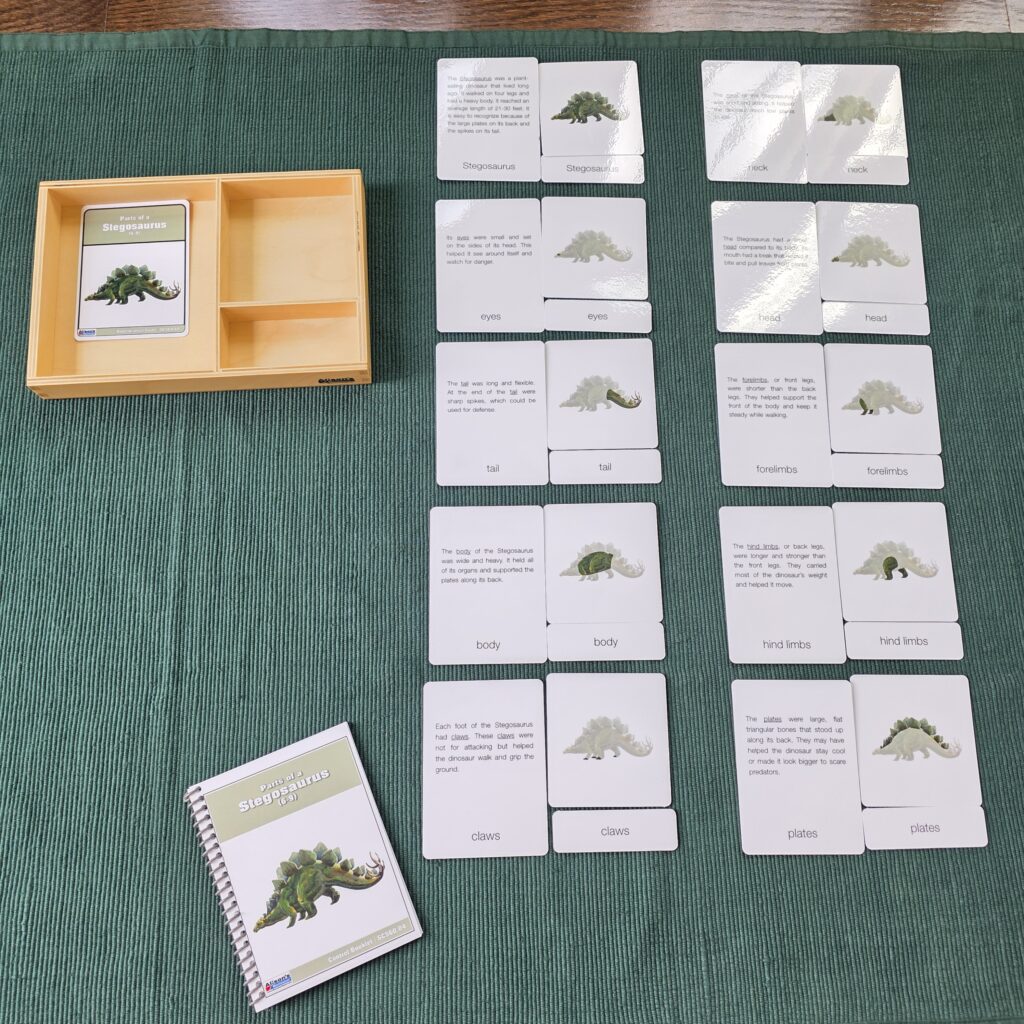
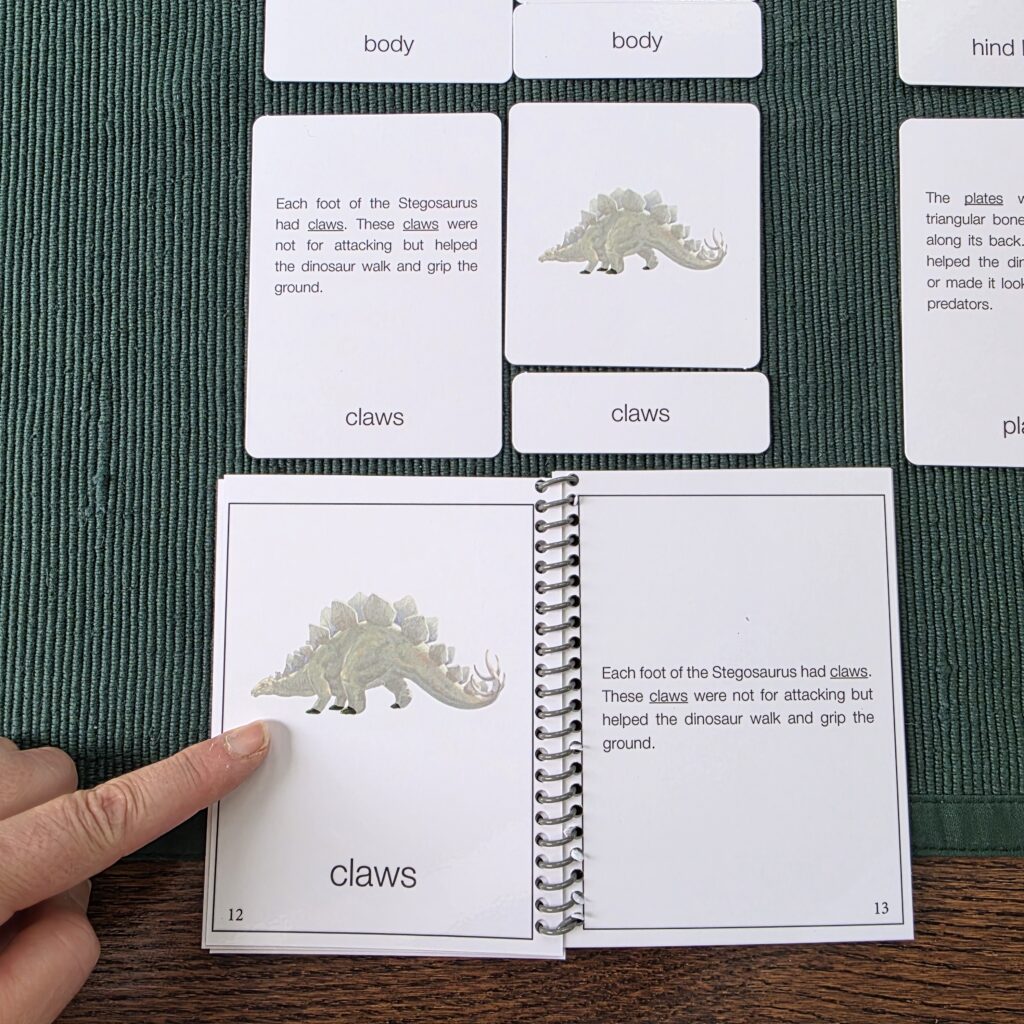
Once children feels competent with the materials content, they can expand their work using the supplemental materials provided with the nomenclature cards. Teachers make copies for the dinosaurs outlines or reproducible booklets, and leave them near the materials so that learners can practice independently. They can color and label the outline of a dinosaur, or complete the missing words in the booklet and color the parts in question with a red pencil.
By introducing the T. Rex and Stegosaurus sets, these materials finally bring the exciting world of dinosaurs into a Montessori classroom for the very first time, especially at the Primary level. For the younger learners, matching the puzzle and 3-part cards builds vocabulary while training their eyes to move from left to right, reinforcing their 3-pinch grip, which are excellent for writing and reading. Older learners can use the advanced description cards to study the differences between both dinosaurs, learn about the function of different body parts, and connect the animal to the Timeline of Life. Instead of just memorizing names, children learn how to observe, classify, and think critically. Our pride ourselves on expanding and modernizing the Montessori curriculum! Visit our website at www.alisonsmontessori.com to explore more of our innovative materials.