
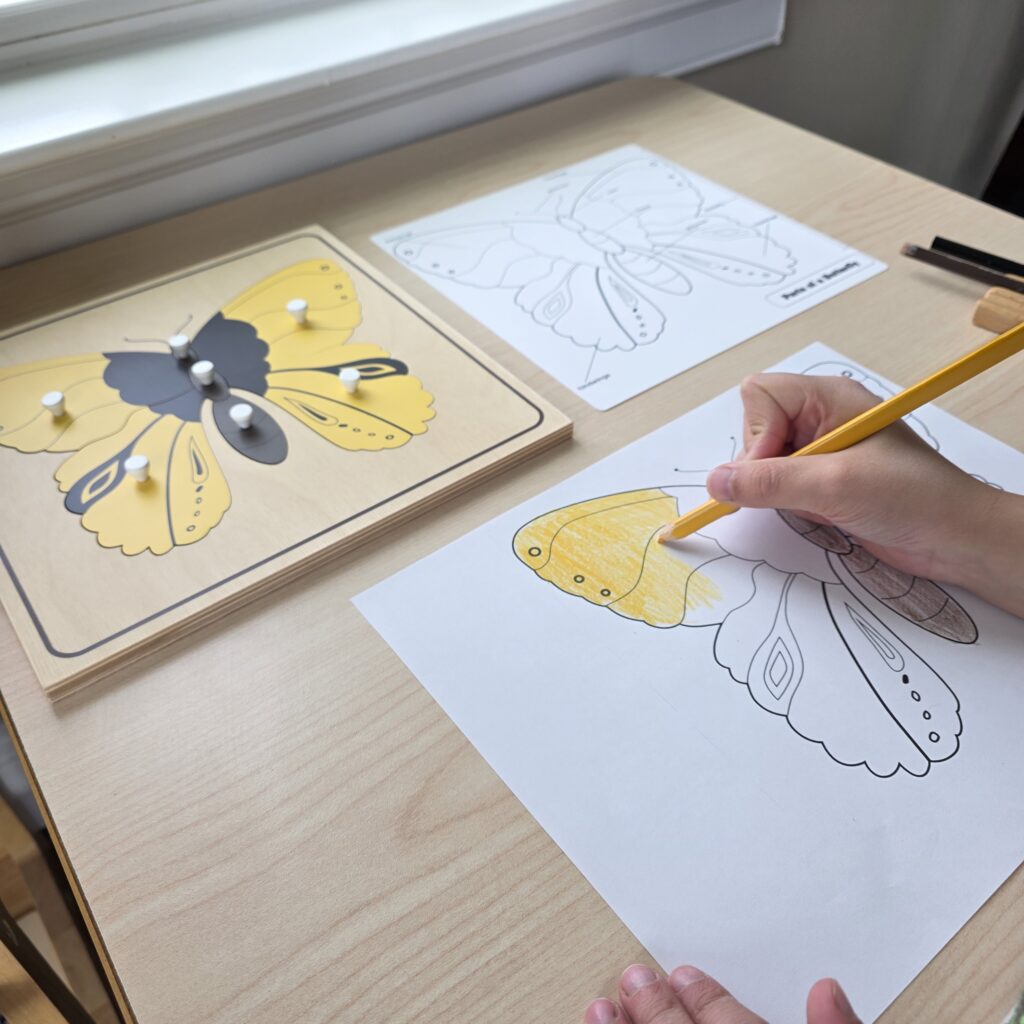
Our zoology materials on butterflies can serve as a complete Montessori primary curriculum for children ages three to six. Each material addresses a distinct conceptual layer of the butterfly: morphology, terminology, metamorphosis, and classification. In Montessori education, learning generally moves from the big picture to the small picture (whole-to-part). Therefore, this blog post will help you present the materials, collectively in a coherent progression from a comparative species study to their small parts.
Materials
- Butterflies of North America (Printed)
- Parts of a Butterfly Nomenclature Cards (3-6) (Printed)
- Parts of a Butterfly Puzzle Nomenclature Cards (3-6) (Premium Quality)
- Butterflies of North America Puzzle
- Parts of a Butterfly Puzzle (Premium Quality)
- Life Cycle Puzzle: Butterfly
Related Materials
- Butterfly Matching Cards (Printed)
- Partes de una Mariposa (3-6) (Printed)
- Butterflies Toob
- Butterfly vs Moth Chart with Cards
- Life Cycle Puzzle: Butterfly
Butterflies of North America
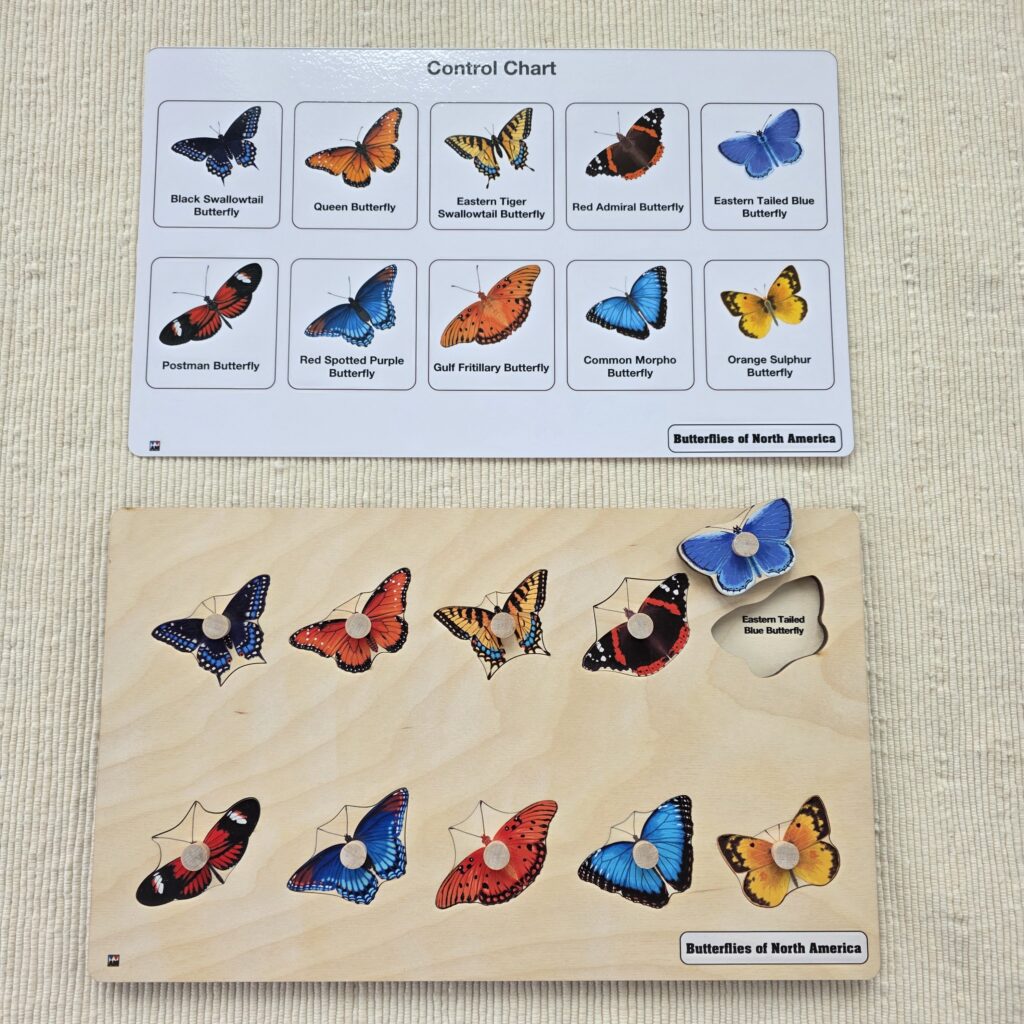
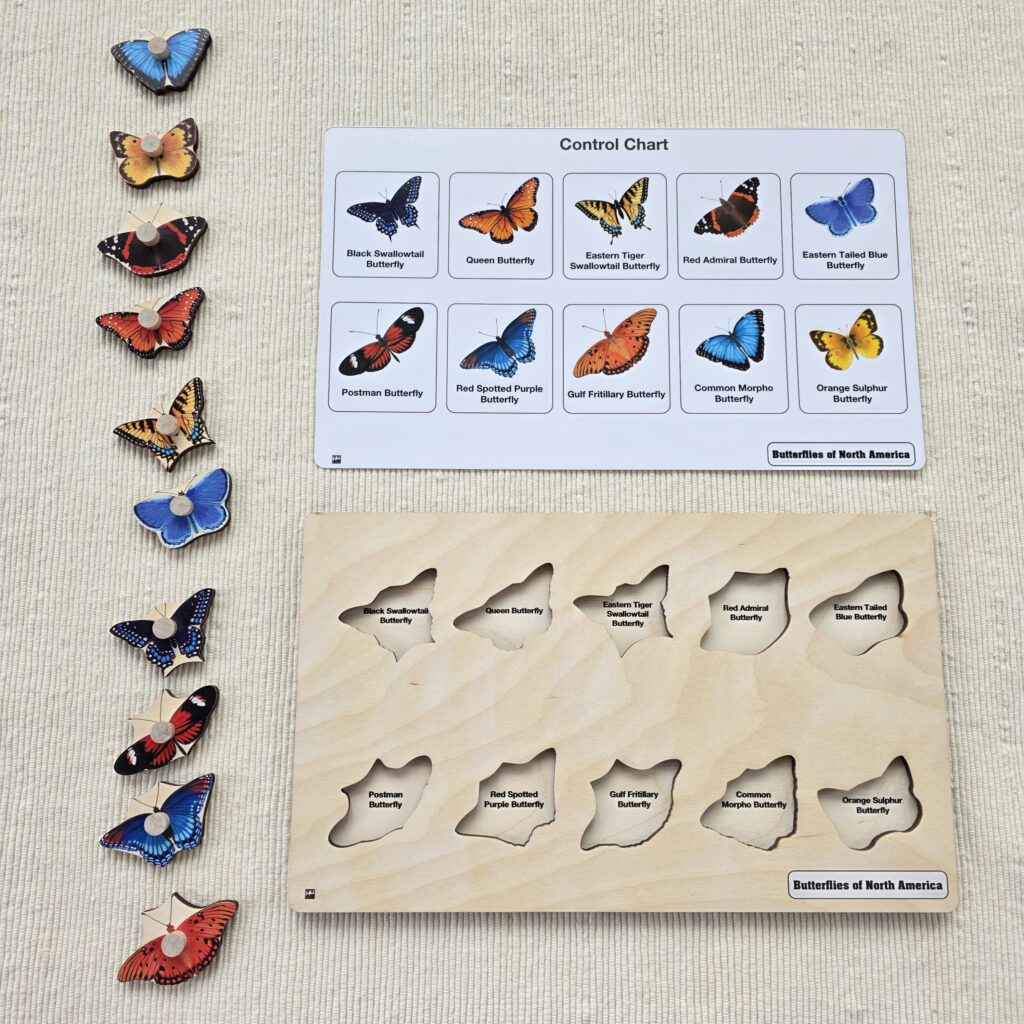
The first material, Butterflies of North America Puzzle, is a great way to introduce the topic of butterflies, which are also readily available in nature! The material consists of a wooden puzzle with 10 pegged pieces and a control chart. Each name is printed inside each inset to challenge emerging readers who want to attempt to recall the names of each butterfly without the use of the control chart.
We recommend that you first introduce the puzzle to a child or a group of learners. Place the puzzle in front of you with the control chart right above the puzzle. Select the first piece in the top left corner, place it over the corresponding picture on the control chart, name the butterfly, and place it on the left side of the puzzle. Continue in this manner with the rest of the pieces, placing them to the left in a mixed order. Finally, select the first butterfly at the top of the column of pieces, identify its location on the control chart, and reposition it back on the puzzle base. Invite the child to take turns or finish the work.
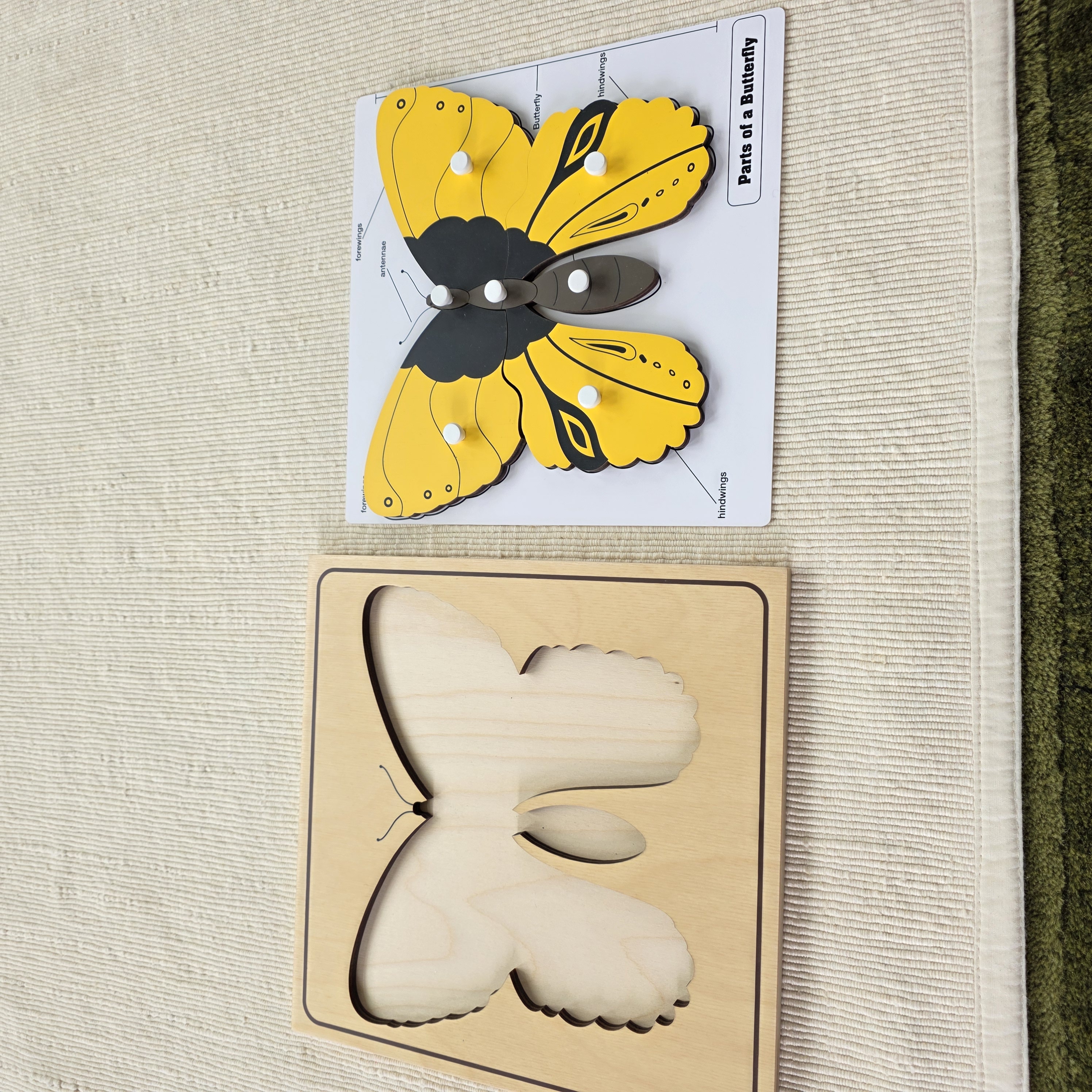
Parts of a Butterfly Puzzle
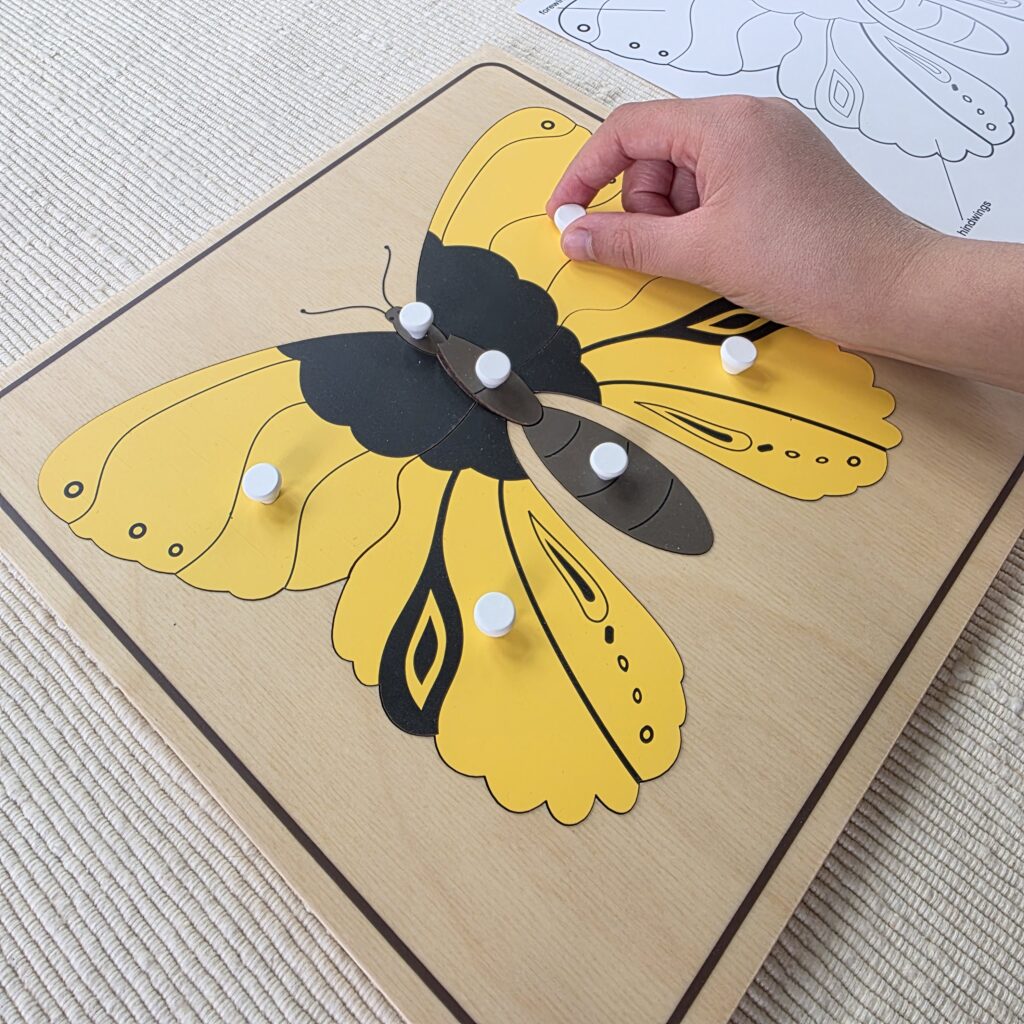
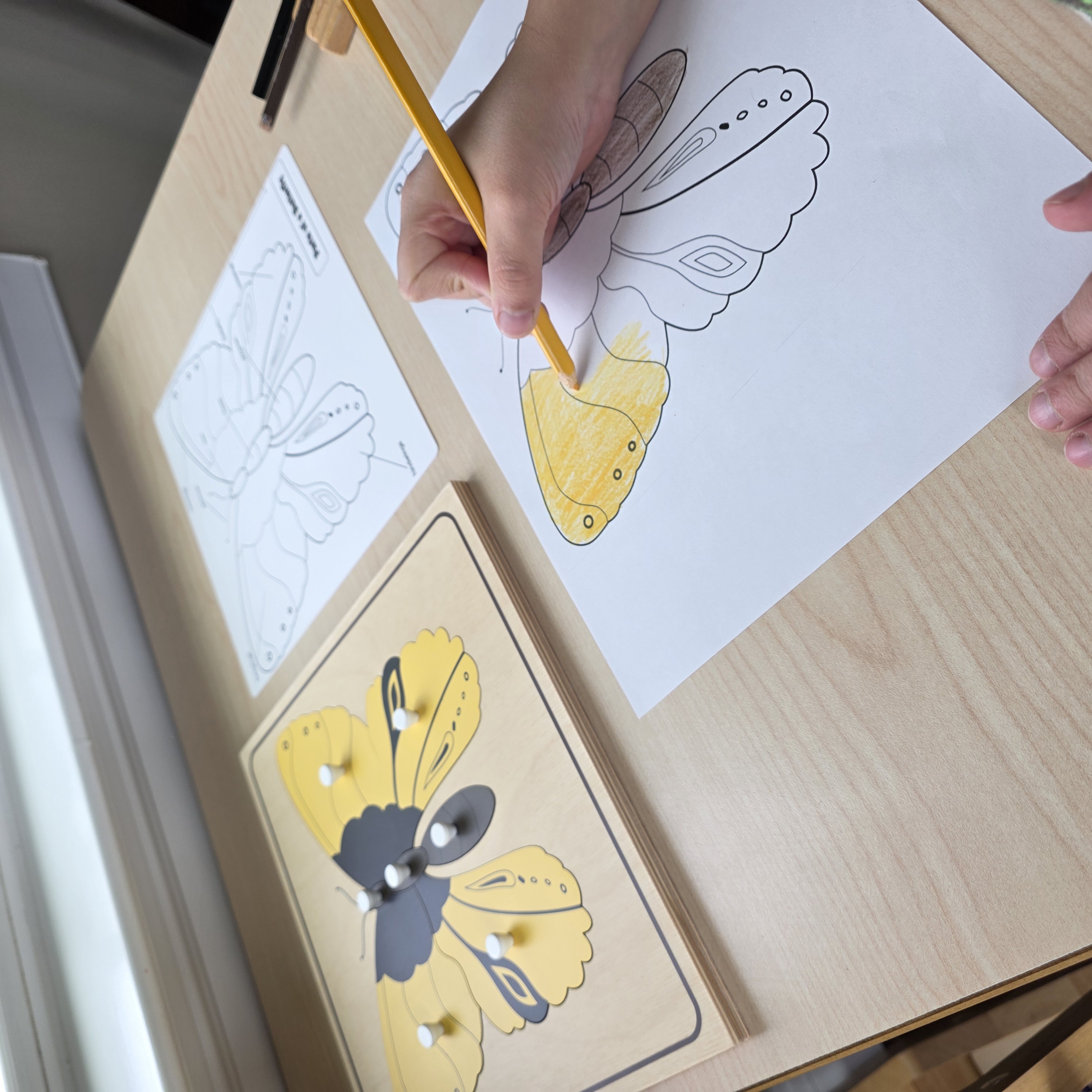
In the Montessori classroom, we want to move from the “most help” to the “least help.” A smart way to do this is by introducing Parts of a Butterfly Puzzle first, then the coloring chart. By working with pegged puzzles, young learners refine their pincer grasp. Placing the pieces one by one, from left to right, over a blank chart, helps develop the reading track. They also develop their sense of visual discrimination by overlaying the pieces over the outline of the control chart. This method helps children pay attention to the lines shapes, and their relationship to one another. This helps discriminate the difference between a ‘b’ and a ‘d’ which look quite similar to a child.
On the first presentation, place the puzzle to the left of a working space, and the labeled control chart to the right. Grasp the first piece on the left side of the puzzle, and superimpose it on the control chart. Only name the part once you have placed the piece, so that the child solely focuses on your movements. Once the puzzle is completely transferred, return it to the puzzle base in a logical manner.
As an extension, copy the blank master copy of Parts of a Butterfly. Invite the child to color and label the chart. After completion, they will take their work home!
Parts of a Butterfly Puzzle Nomenclature Cards
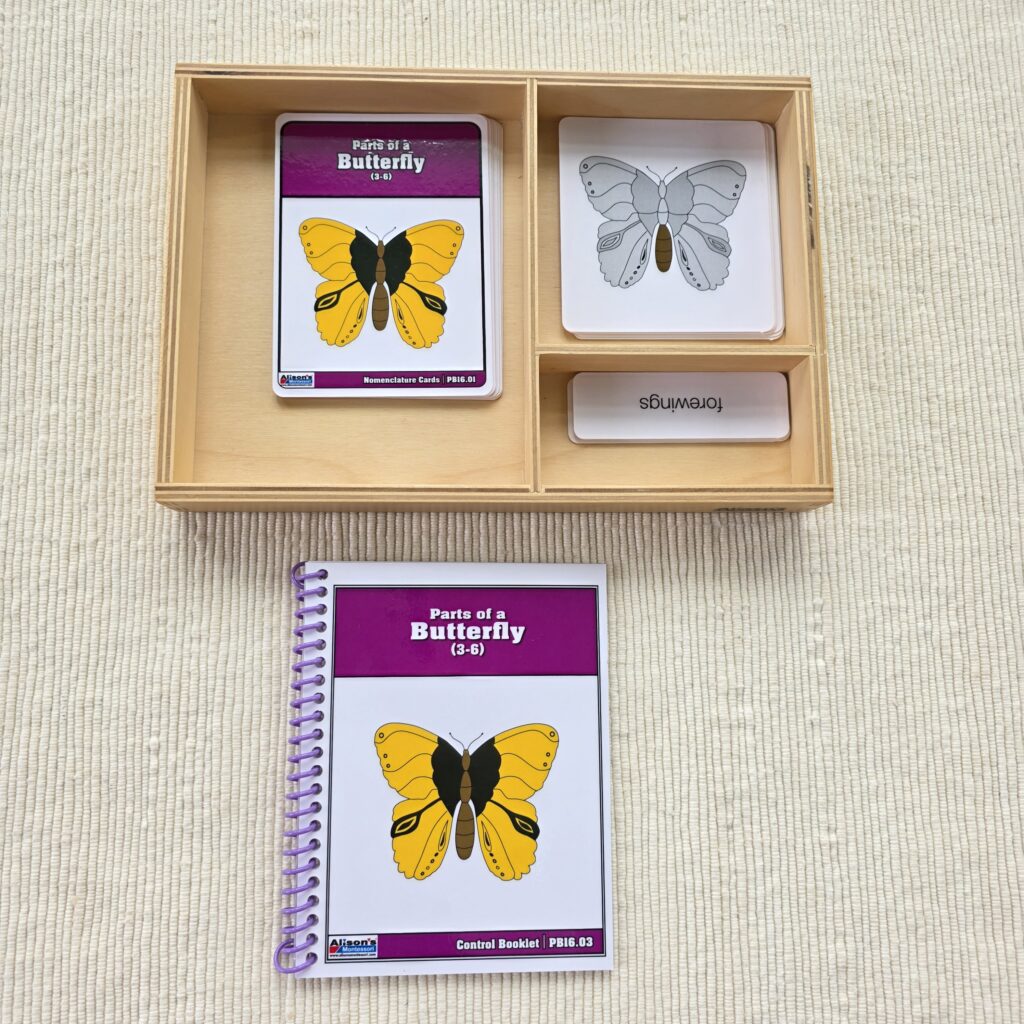
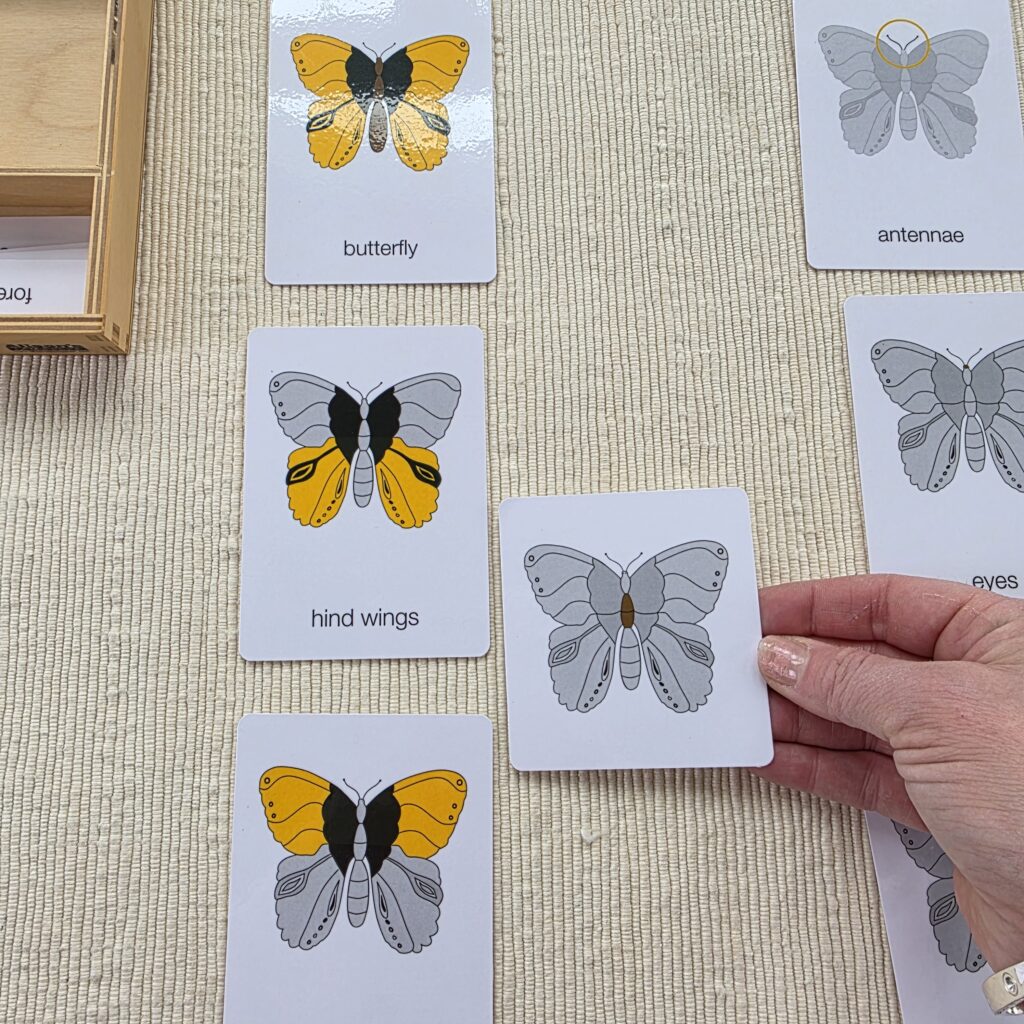
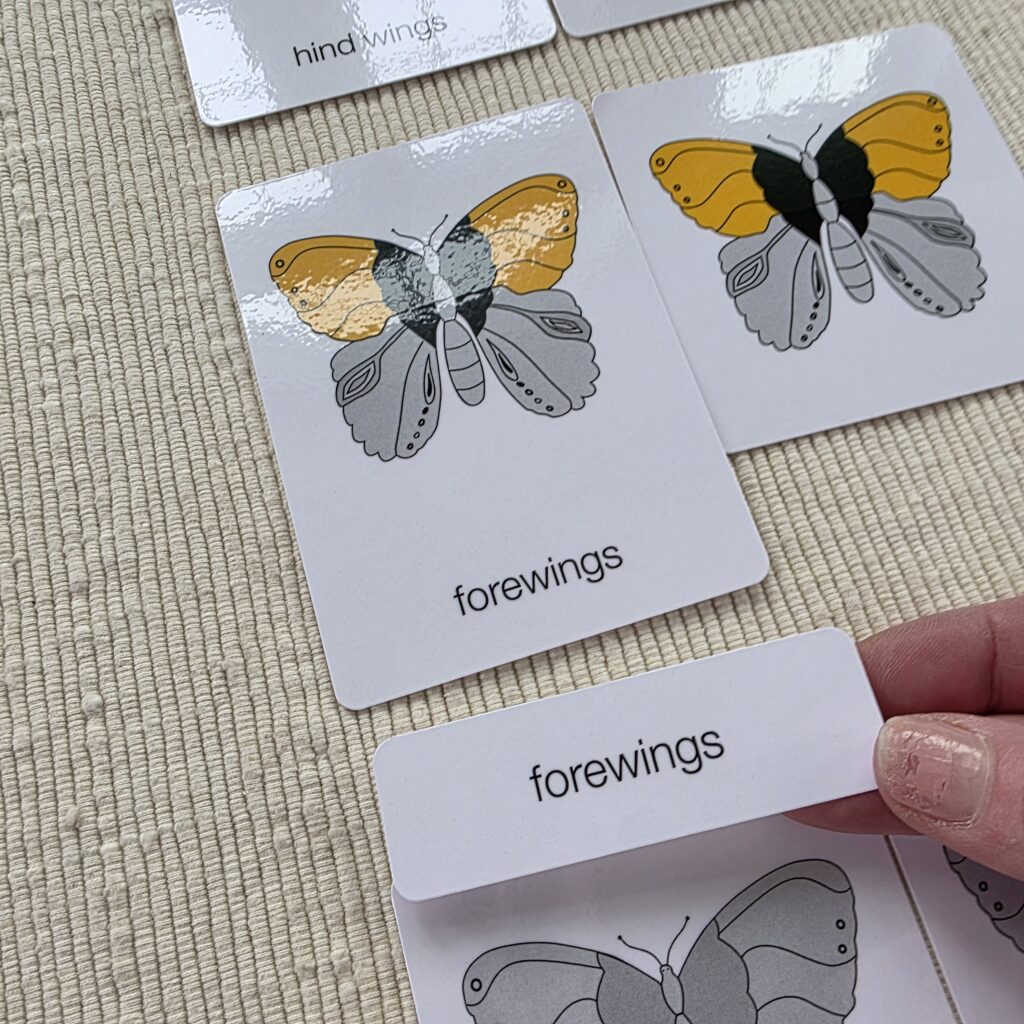
Parts of a Butterfly Nomenclature Cards grow with the child’s skills. For non-readers, the three-part cards act like a matching game. They look at the colorful highlights on the control cards to match the exact same picture cards. For emerging readers, the practice of reading the labels.
To present the three-part nomenclature cards, select the set of control cards (large cards) and demonstrate to the child how to lay the control cards out from top to bottom, to the left of the tray. Next, pick up the set of picture cards, place them in a pile on your left side at the bottom of the working space. Select the first card, place it on the right of the first control card at the top, and compare it to every card until you find the corresponding card. Place it to its right side. Once all cards have been matched, pick up the set of label cards. Select the first label, place it below the label of the first control card at the top, to compare and see if the letters match. If they don’t match, continue scanning the set of control card, from top to bottom. Place the label cards below each corresponding picture cards.
Life Cycle Puzzle: Butterfly
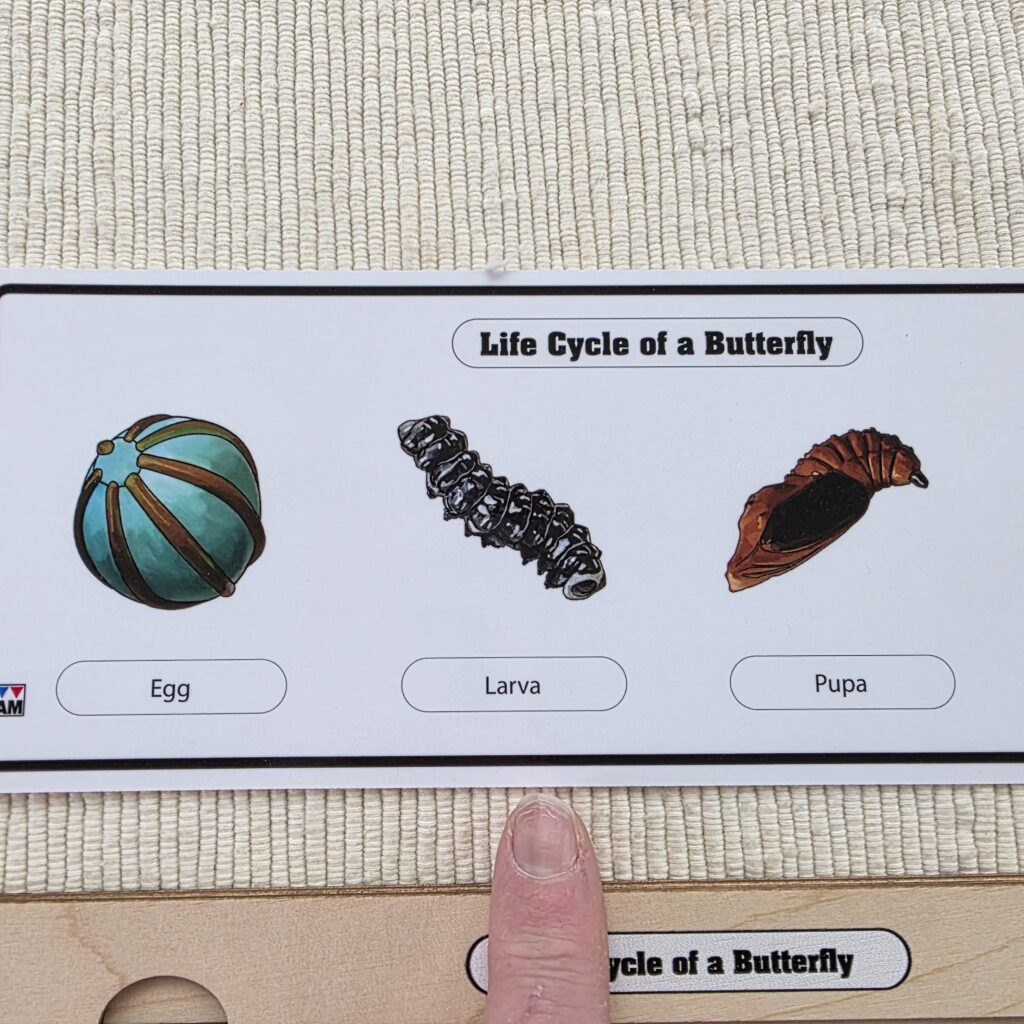
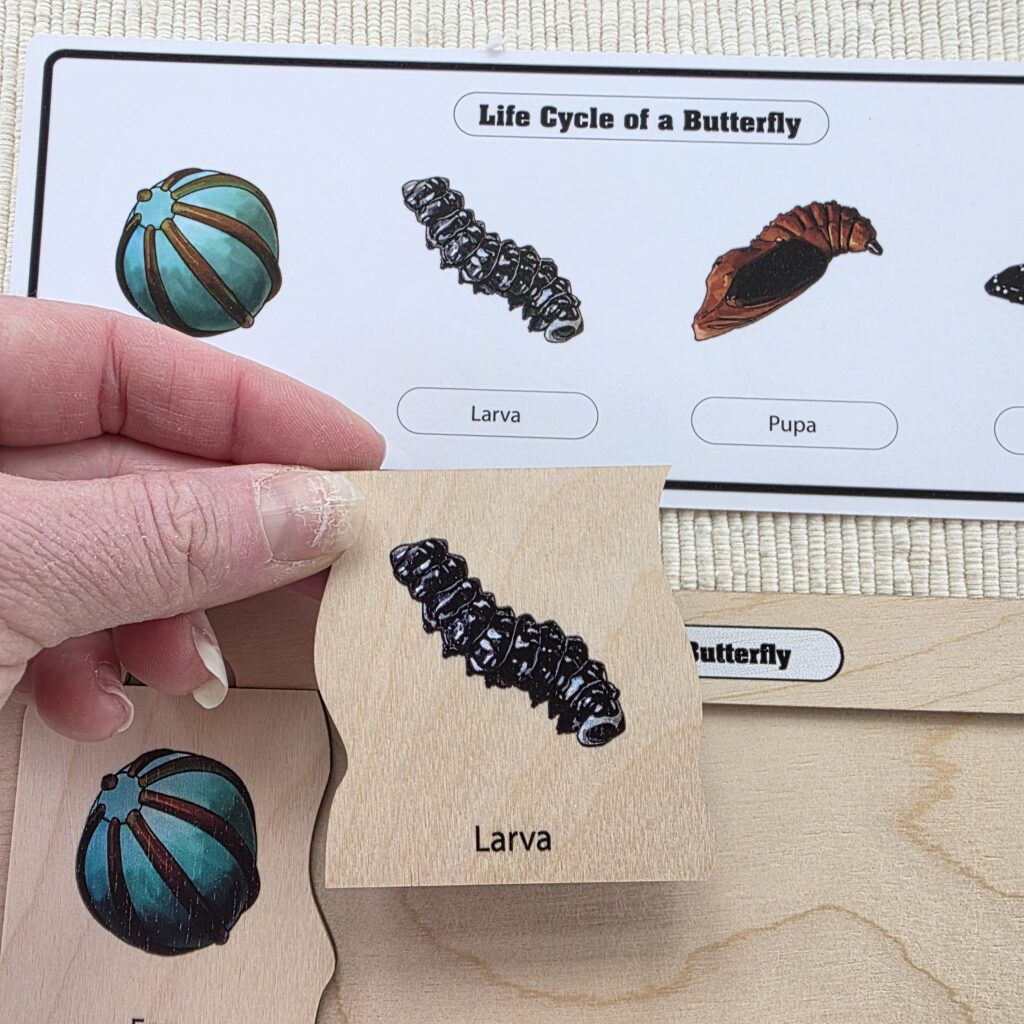
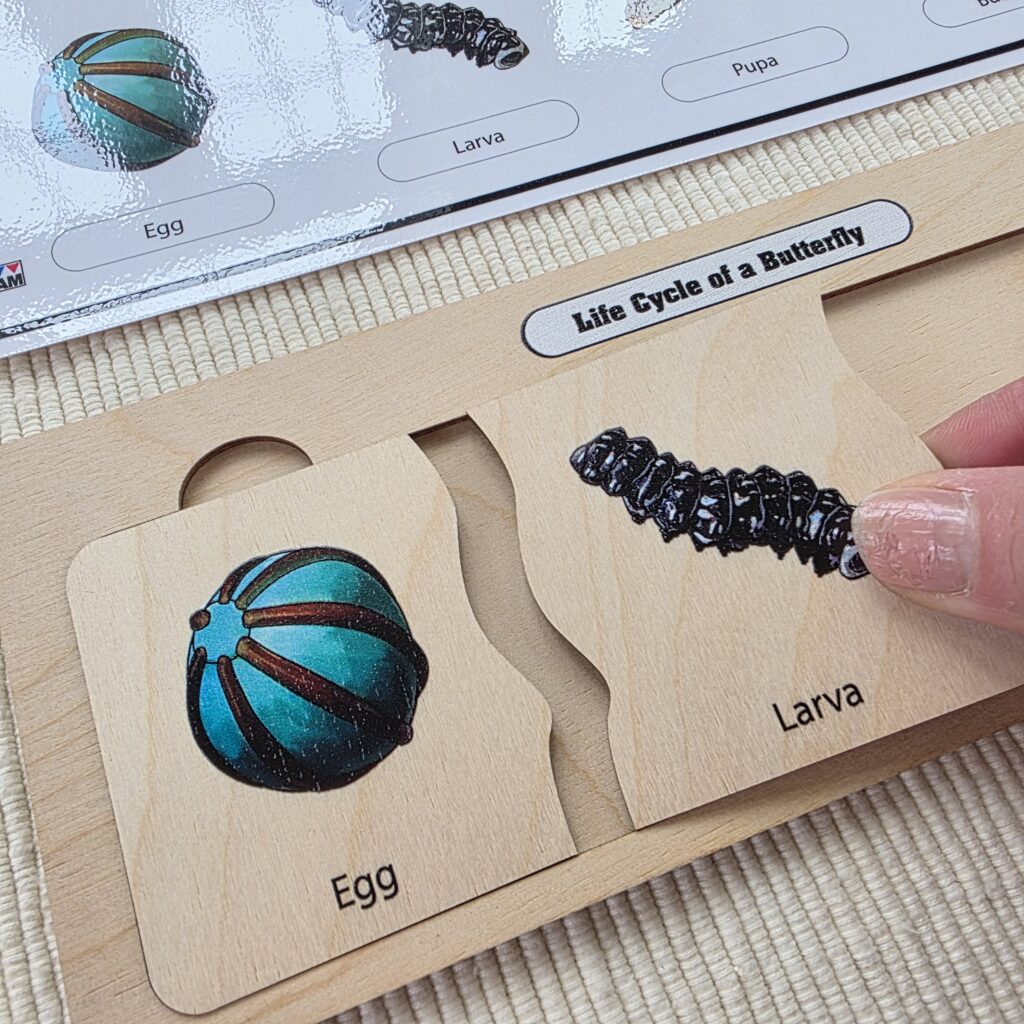
Finally, Life Cycle Puzzle: Butterfly presents the complete metamorphic sequence of the butterfly from egg, to larva, to pupa, to adult. The material consists of a long self-corrective wooden puzzle and a control chart. The chart serves as a guide showing the correct order of the stages from left to right. This order helps children to learn the concept of time and growth while practicing the same way they will read books.
For a three or four-year-child, place the puzzle in front of you with the control chart above the puzzle. Select the egg piece, and explain that the butterfly starts as a tiny egg. Have the child match the piece of puzzle to the control chart, and place it to the left of the puzzle. Select the larva piece, and continue in the same manner, placing the next piece to the left of the puzzle base, from top to bottom, in a mixed order. Invite the child to place the first stage of the puzzle on the wooden base. The puzzle is self-corrective so that the child can work independently!
For a five year old, challenge them by using the names of the stages, Ask them to find any given stage randomly. At the age, they could reconstruct the puzzle outside the puzzle base with the control chart out of sight.
Our butterfly set of materials uses a step-by-step scientific method to study a specific insect. Learners begin by looking at the large diversity of butterflies with the Butterflies of North America puzzle. The study moves to external parts of the butterfly using the Parts of a Butterfly puzzle to identify specific parts that butterflies have in common. After using matching nomenclature cards to learn scientific names, the process of learning ends with the Life Cycle of a Butterfly puzzle. This material demonstrates the stages of metamorphosis, showing how insects change from an egg to an adult! The set provides a logical sequence aligned with the Montessori principles. For more innovative science materials, visit our website at www.alisonsmontessori.com.