
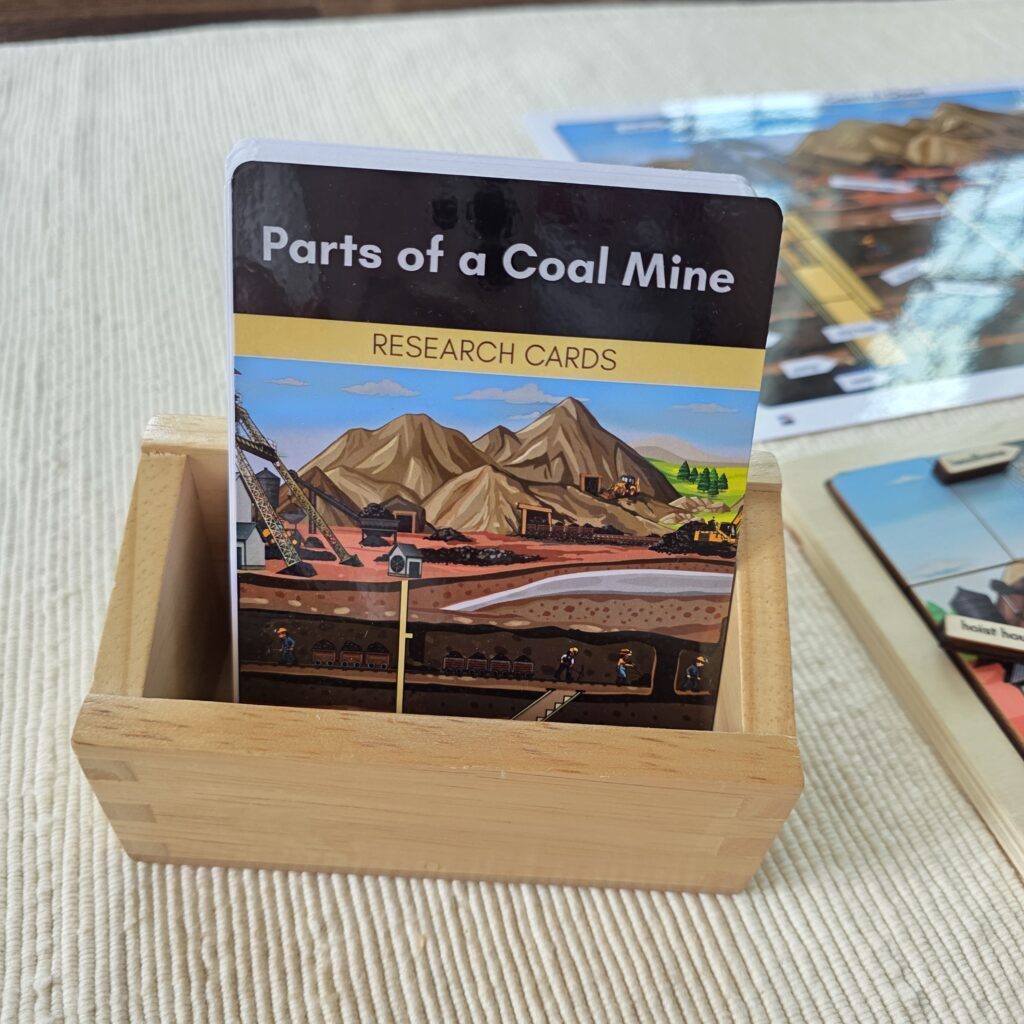
In the Upper Elementary classroom, science and geography come together. Children this age want to know how the world works. Our new and exclusive materials on Parts of a Coal Mine Puzzle – Complete Set provide an understanding on how underground resources are found and gathered. The topic on Parts of a Coal Mine connects to other materials such as The Carbon Cycle Puzzle and The Nitrogen Cycle Puzzle, because coal is a fossil fuel made of ancient plants, which is studied through the Timeline of Life. Learners understand how carbon is moved from the lithosphere back to atmosphere through human industry. In this blog post, you can inspiration on how to sequence the materials, and introduce them in a logical order.
Materials
- Parts of a Coal Mine Puzzle
- Parts of a Coal Mine Research Cards
- Parts of a Coal Mine Task Cards
- Parts of a Coal Mine Puzzle – Complete Set
Step 1 – Wooden Puzzle and Control Chart
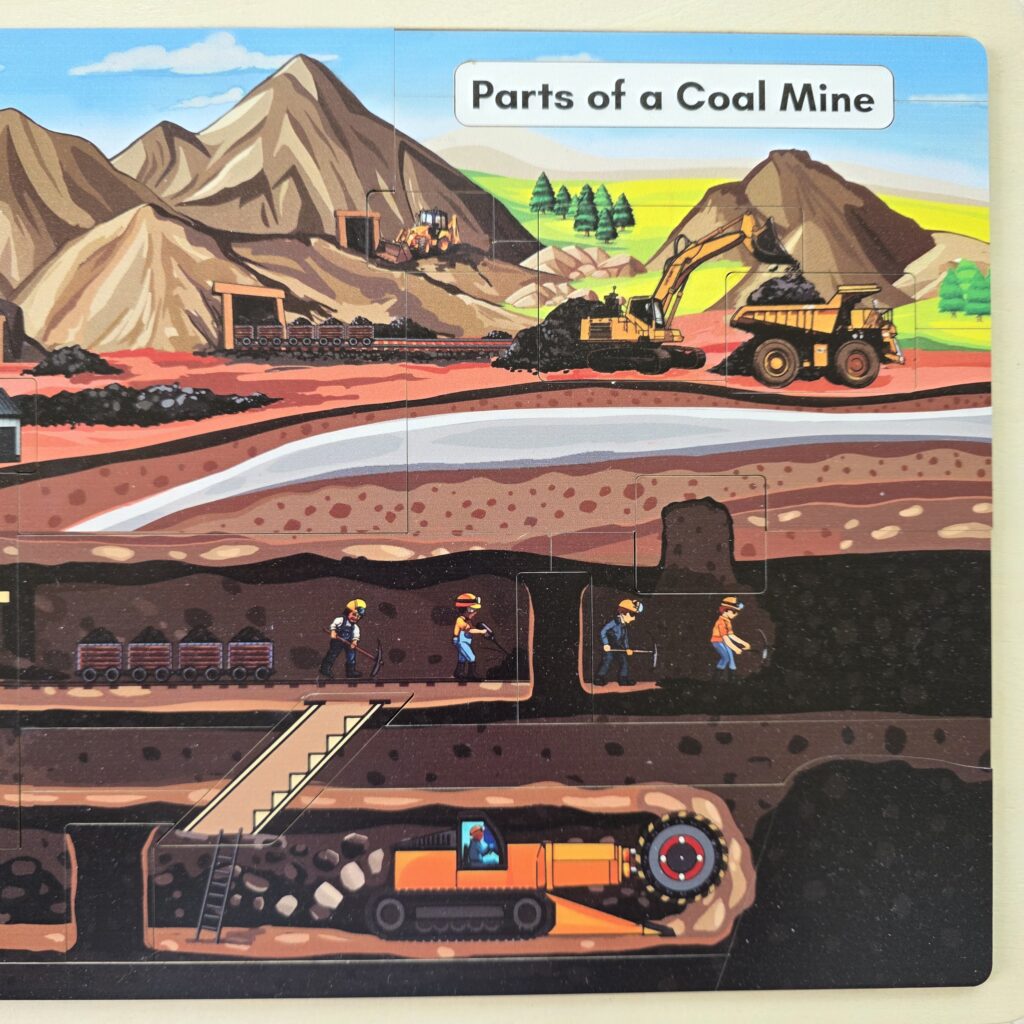
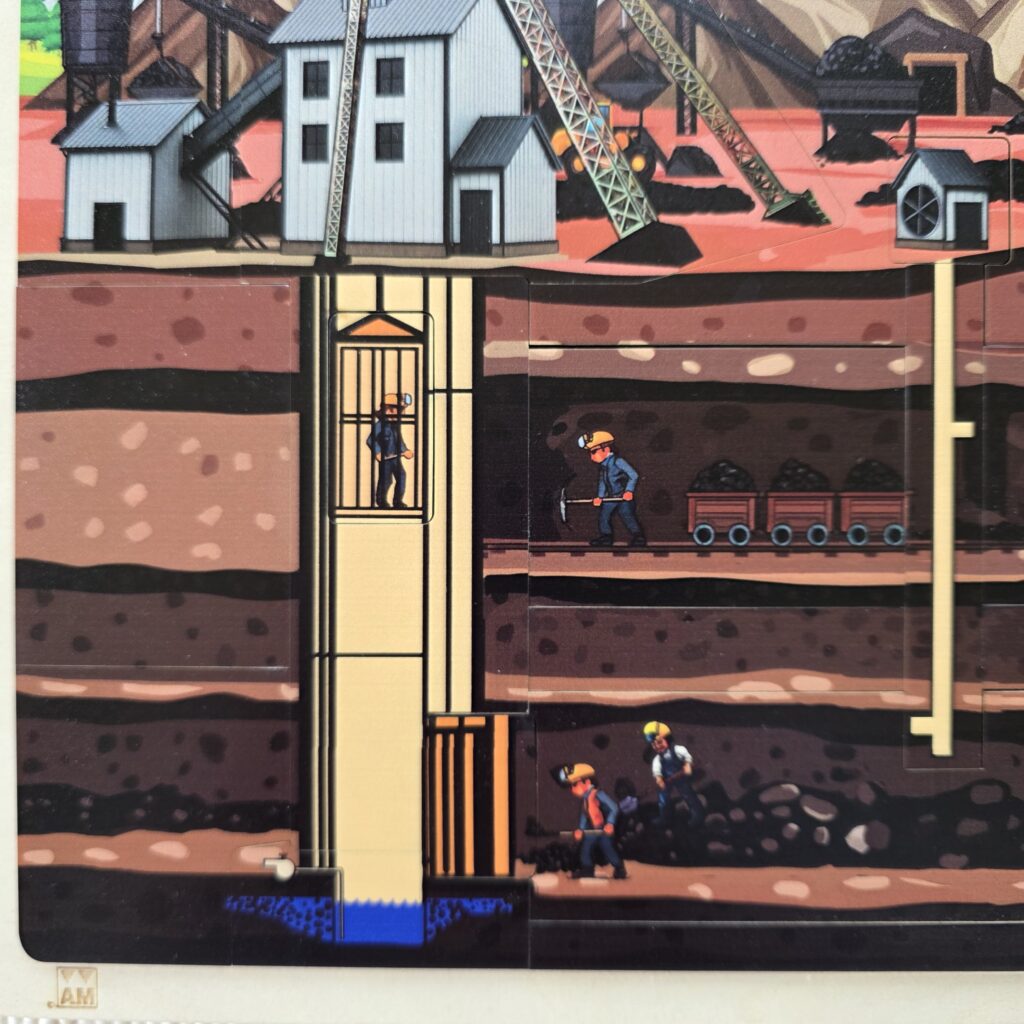
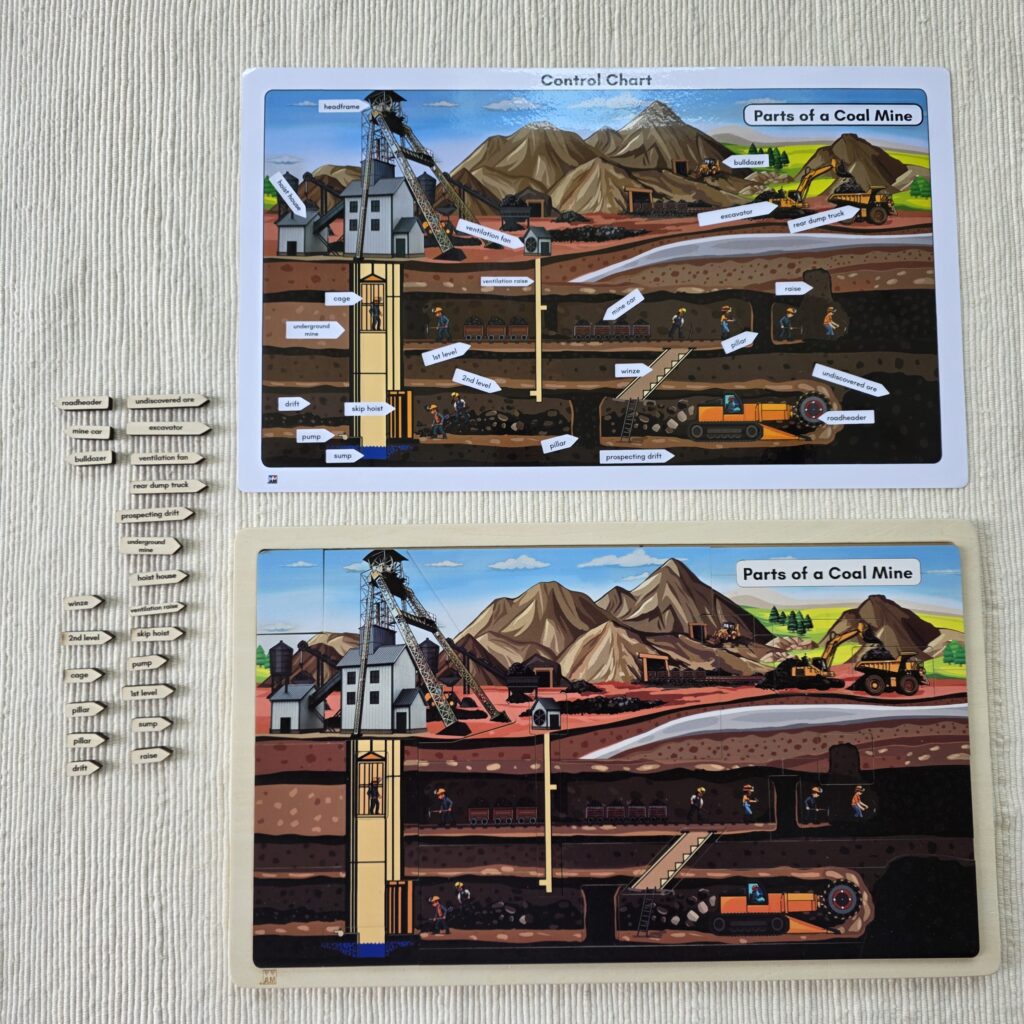
The puzzle represents how a coal mine functions; it is split in two parts: the above the ground and deep underground. Above the ground are parts with which children may be familiar with: bulldozer, excavator, dump trunk, ventilation fan, or ‘hoist’ house. this part can be your starting point for introducing the Parts of a Coal Mine Puzzle. Following is the deep underground with more specialized terms such as: pump, sump, skip hoist, drift, winze, roadheader, prospecting drift, etc.
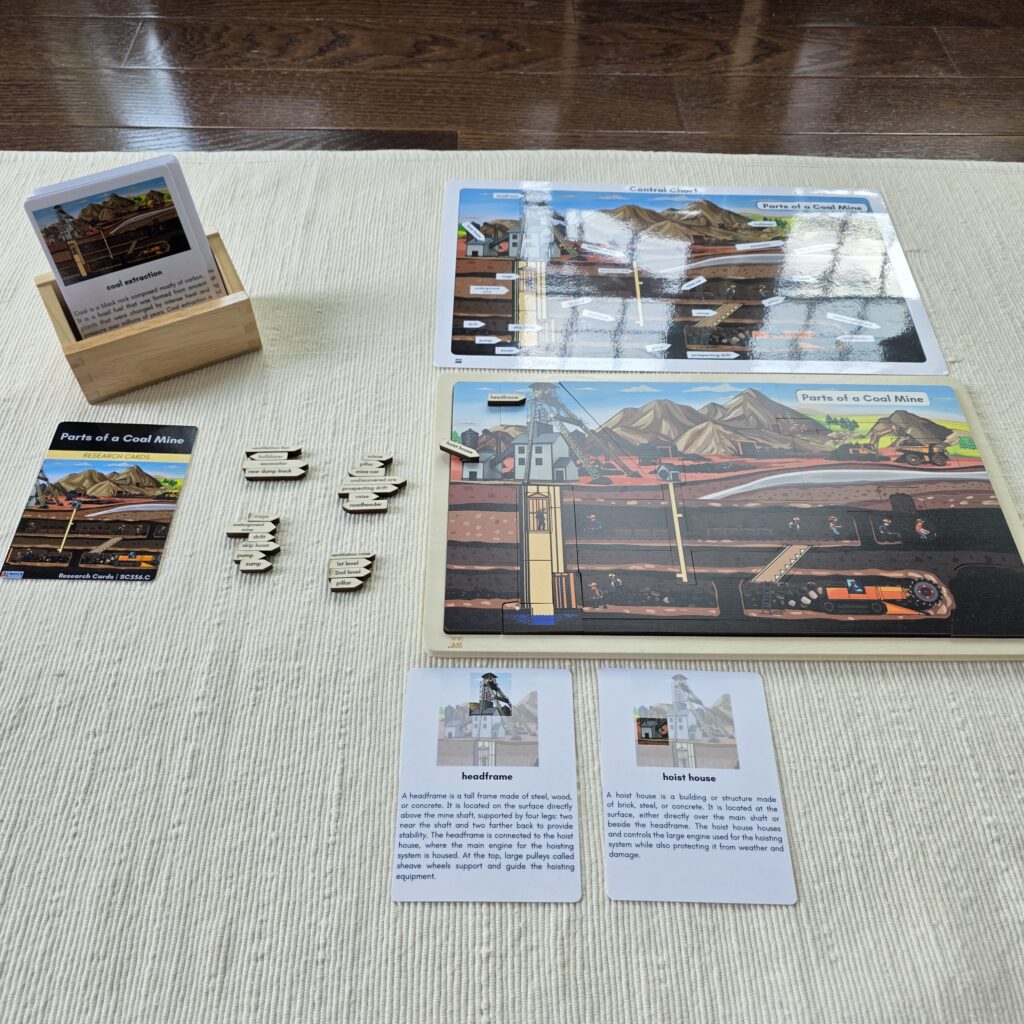
Since it is a brand-new topic for children ages 9-12, help children set up the materials by placing the control chart directly above the puzzle, and lining up the arrows in a column to the left side of the puzzle to ensure a smooth flow from left to right. Guide the children to label the entire puzzle from left to right, top to bottom. Next, you can proceed in reading some of the research cards together.
Step 2 – Research Cards
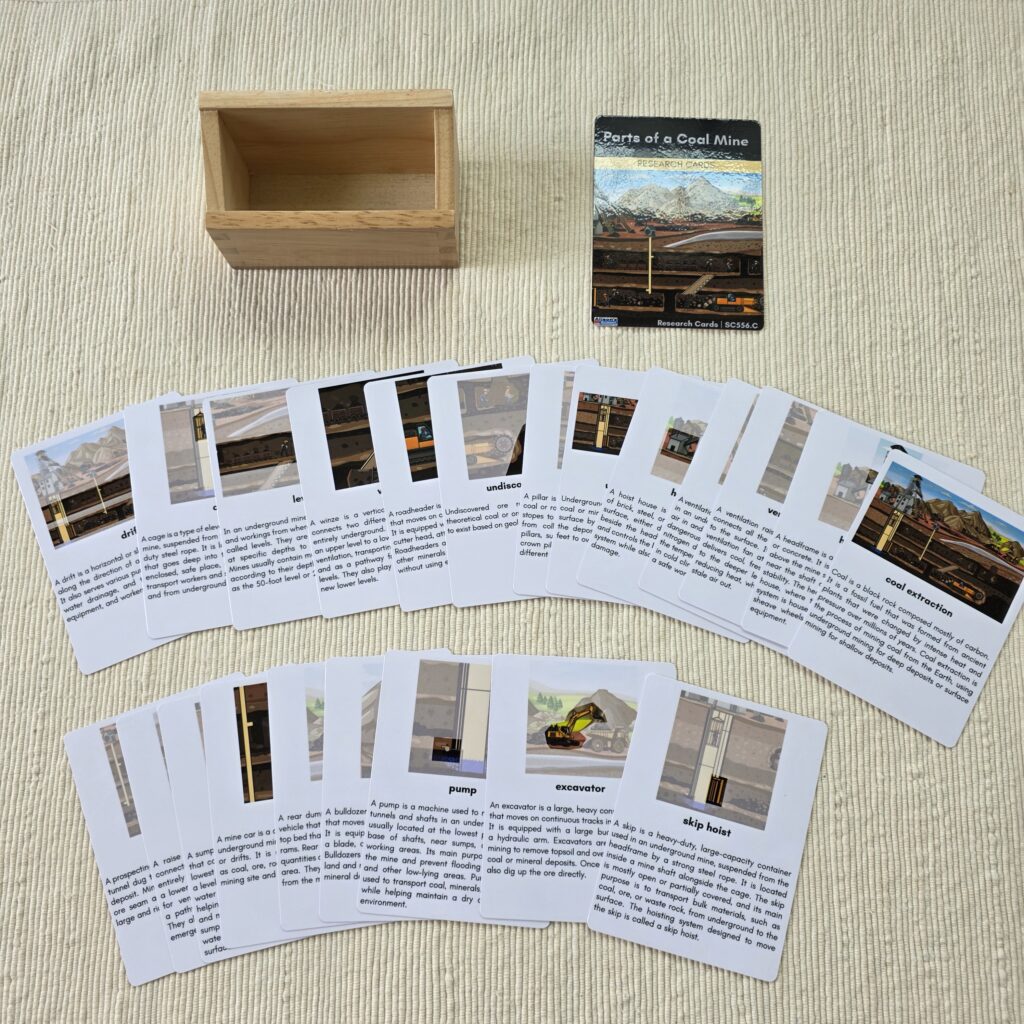
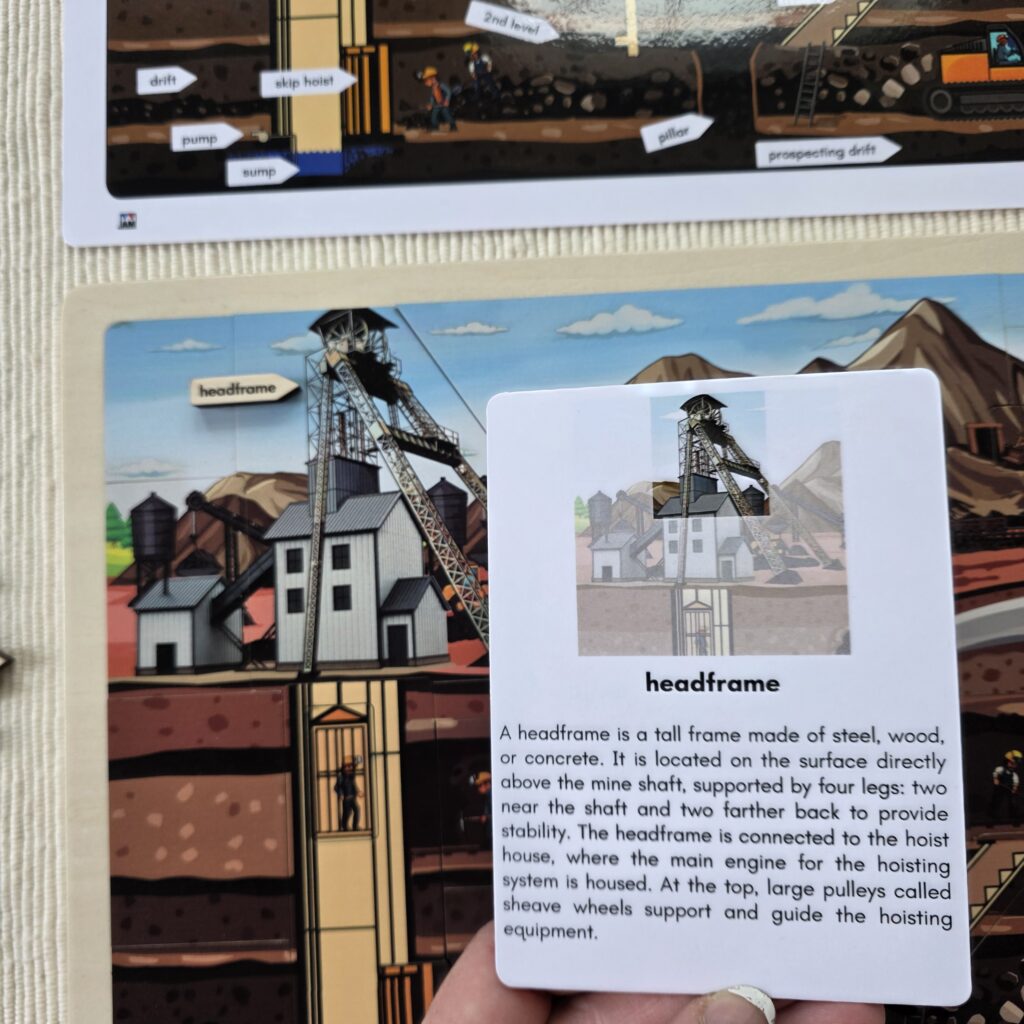
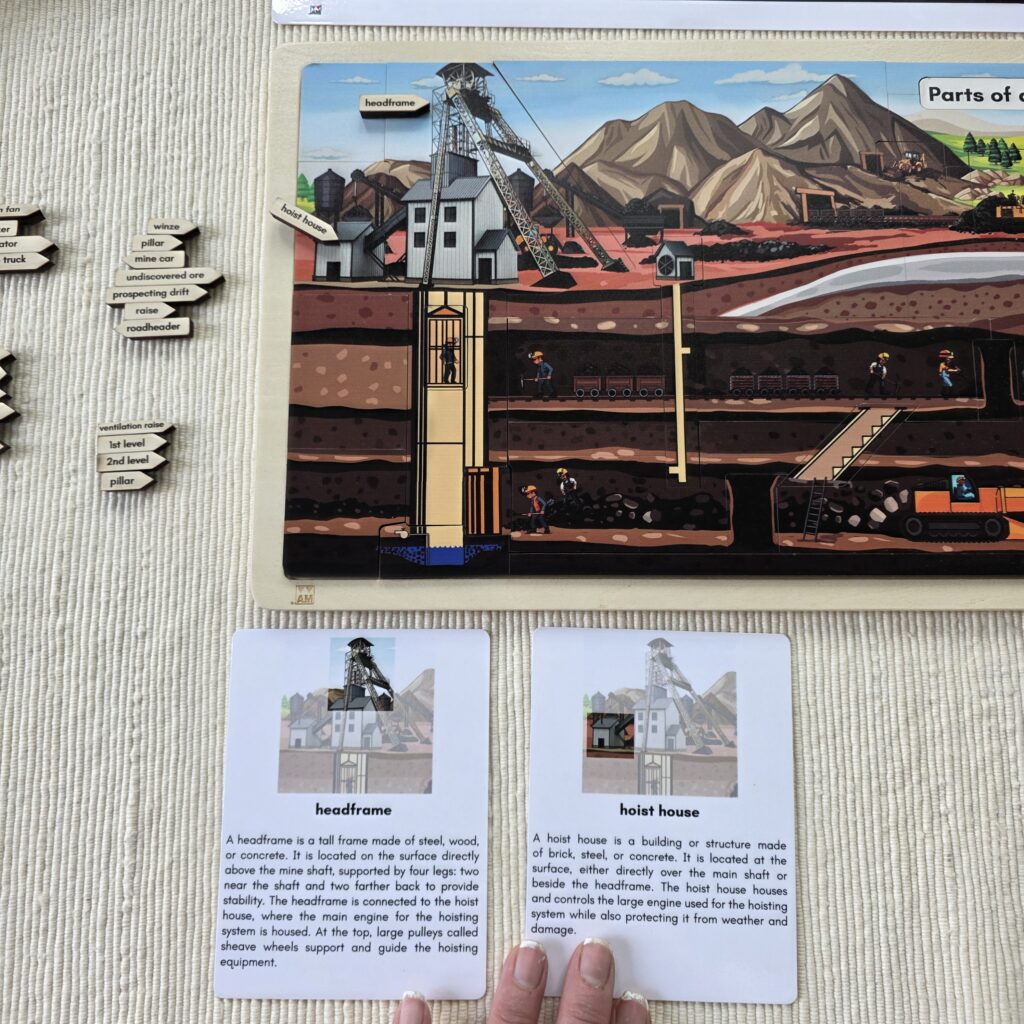
Once the puzzle is fully labeled, you can transition the children to Parts of a Coal Mine Research Cards. Bring the set of cards, and place the container to the top right side of the puzzle. Select the cards with which children might be most familiar first, such as the above-the-ground cards: headframe, hoist house, ventilation fan, bulldozer, excavator, and rear dump truck. Read the cards and allow time for discussions.
Continue with the underground terminology cards, which include prospecting drift, drift, underground mine, levels, pillars, winze, raise, mine car, sump, pump, cage, skip hoist, ventilation raise, roadheader, and undiscovered ore. Take your time on these cards since mining underground can be more difficult for children to imagine. Let the children go back to the puzzle and identify the location of the terms as you read the matching card out loud. This back and forth process between reading and identifying the parts helps consolidate the knowledge. Encourage learners to read the research cards on their own after the presentation.
Step 3 – Task Cards
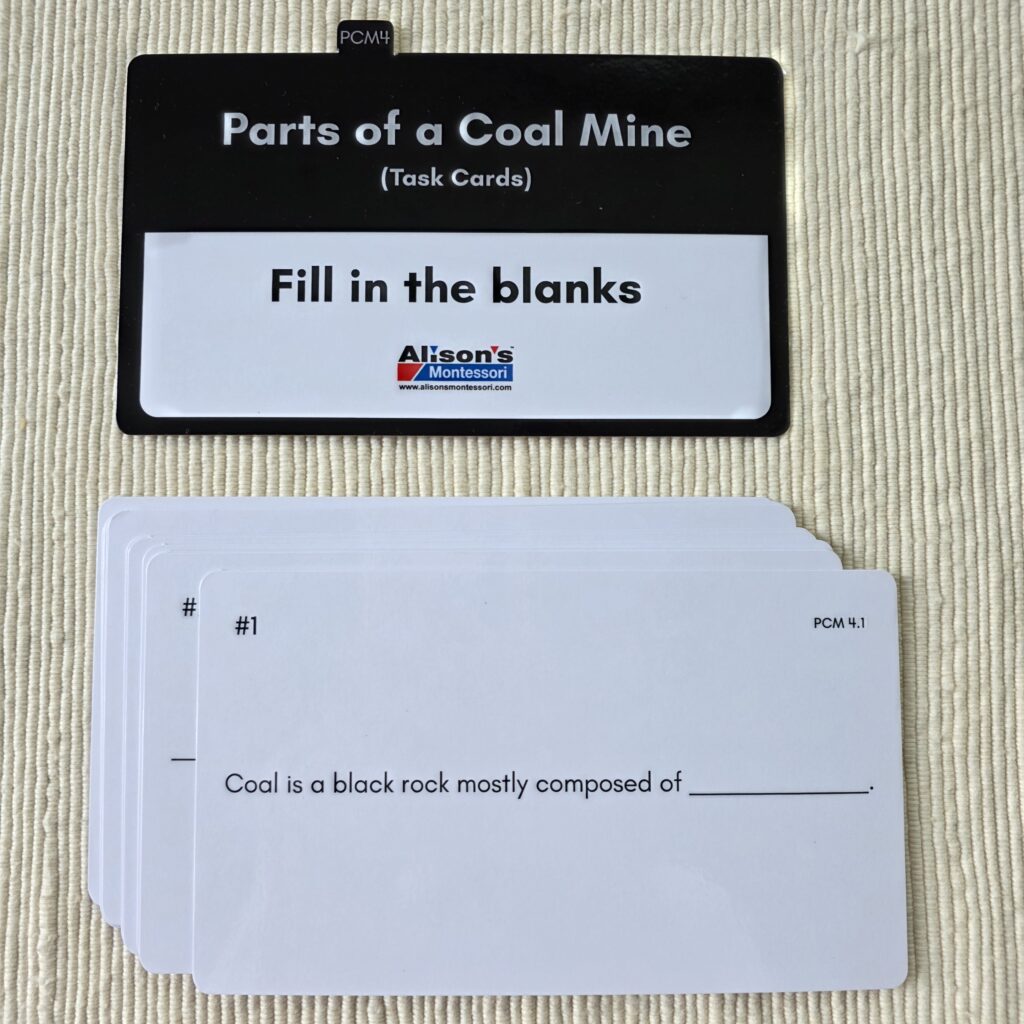
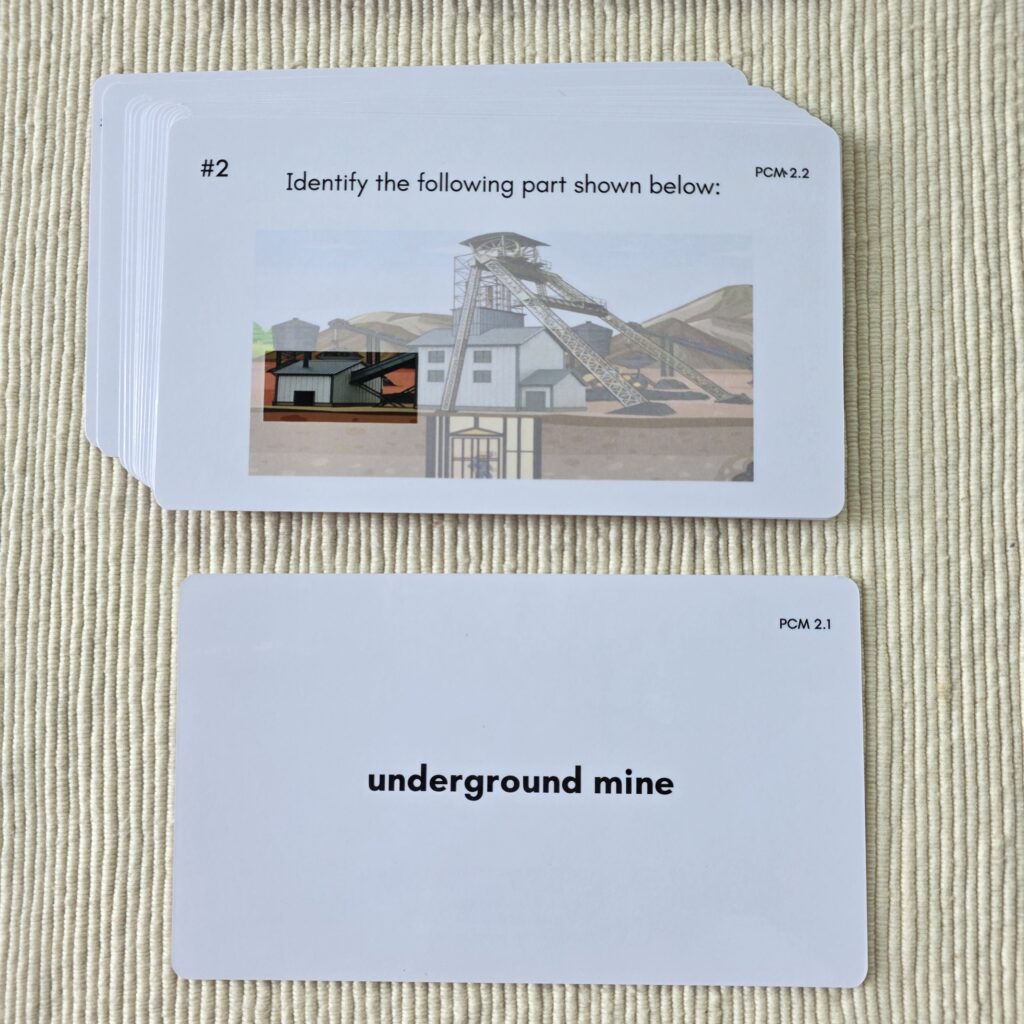
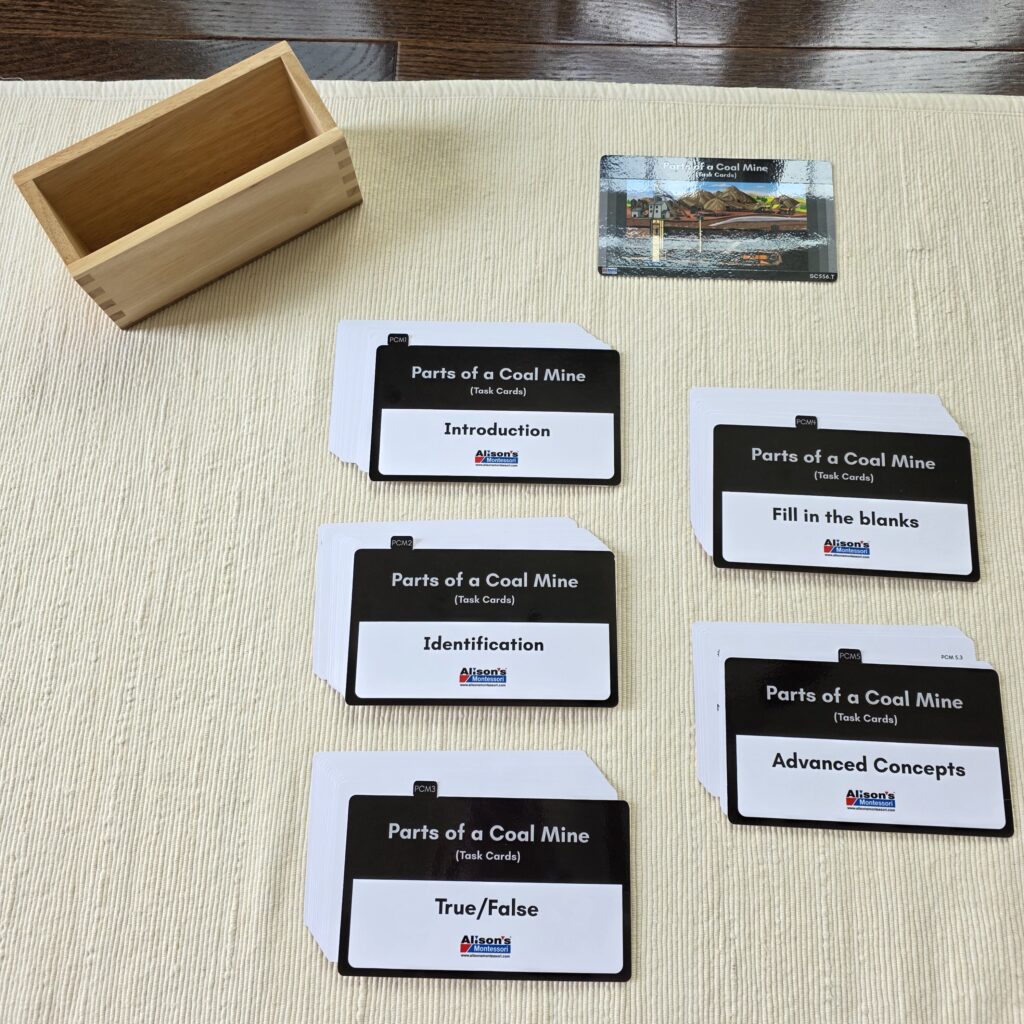
On another day, once the children are comfortable with the research cards, bring the Puzzle and Control Chart to the working space. Invite children to work with the Task Cards. Take them to the shelf where the set of task cards is located, and let them know that this material is theirs to revisit whenever they would like. Bring the container to the working space, and initiate the work by going over the first section, before letting take the work over. Parts of a Coal Mine Task Cards set is broken into five sections, and each one builds on what the children learned from the research cards:
- Introduction: This section invites children set up and review the materials.
- Identification: This section ask children to observe an isolated part and name it.
- True/False: This section check if children can understand the facts the have learned from the research cards.
- Fill in the Blank: This section check if children can recall a key word from memory based on provided cues.
- Advanced Concepts: This section encourages older learners to think a little deeper and conduct outside research on their own.
Using the materials in this order follows the Montessori approach of going from concrete to abstract. Children start to handle the puzzle and arrows, learn about each part of a coal mine using the research cards, and reinforce their knowledge by working independently with the task cards. By offering a consistent learning design, Alison’s Montessori materials ensure that Montessori learners are familiar with the working framework and can confidently learn new concepts while focusing on the content of the learning rather than the form! For more innovative Montessori materials, visit our website at www.alisonsmontessori.com.